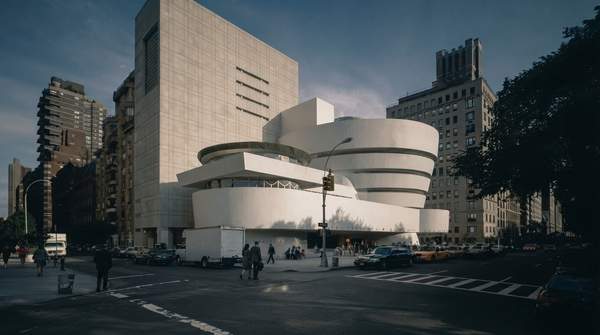
In 2018, the Metropolitan Museum of Art alone received over $250 million in philanthropic support, a sum that demonstrates the immense scale of giving directed towards established cultural behemoths, according to Nature. The $250 million figure, a stark demonstration of iconic institutions' enduring appeal, simultaneously illuminates a widening chasm within the broader arts ecosystem. Such a colossal influx of capital into a single entity inevitably overshadows the aspirations of countless smaller, community-focused organizations.
This striking concentration of resources persists despite the continued ascent of overall charitable giving to the arts. The distribution of these funds, however, skews predominantly towards a select few large institutions and major foundations, while the share traditionally contributed by individual donors steadily declines. This tension defines the contemporary discourse surrounding cultural philanthropy, posing fundamental questions of equity and access.
The cultural sector appears poised for further consolidation of power and resources. This trajectory promises greater financial stability for established giants but increased precarity and reduced innovation for smaller, community-based arts organizations. Such a trend necessitates a critical examination of philanthropic distribution mechanisms and their long-term implications for artistic diversity and public engagement.
What are the overall trends in cultural giving?
Total charitable giving in the United States reached approximately $450 billion in 2019, an increase of 5 percent from the preceding year, according to artsconsulting. Within this expansive philanthropic landscape, the arts, culture, and humanities sector secured an estimated $21.6 billion in contributions for the same year, representing 6 percent of all charitable contributions. Notably, contributions to the arts increased by 11 percent from the previous year in 2019.
While these figures suggest a robust financial health for the arts sector, they obscure a significant transformation in the sources and distribution of philanthropic support. This growth, though superficially beneficial, actually conceals an underlying shift in the architecture of cultural philanthropy. The benefits are demonstrably not uniformly dispersed across the sector, indicating a deepening stratification rather than widespread prosperity.
The Concentration of Power and Funds
In 2018, arts giving from the 1,000 largest foundations totaled $3 billion, according to rockpa. The $3 billion sum, representing a 4 percent increase from the previous year, underscores the growing influence of institutional philanthropy in shaping cultural funding models. The allocation of these funds, however, exposes a stark asymmetry within the arts sector.
| Metric | Value | Source |
|---|---|---|
| Top 1% of museums' share of donated revenues | 41% | Nature |
| Arts giving from 1,000 largest foundations (2018) | $3 billion | according to rockpa |
| Increase in arts giving from 1,000 largest foundations (2018) | 4% | according to rockpa |
| Art funding locally provided (in donor’s state) | 60%+ | Nature |
This disproportionate share of funding, heavily supported by growing foundation giving, creates a two-tiered system where resources are increasingly centralized. The top 1% of museums, for instance, receive an astonishing 41% of donated revenues, according to Nature. The fact that the top 1% of museums receive 41% of donated revenues confirms that while the overall funding pie for the arts expands, the vast majority of that growth is disproportionately captured by a tiny elite, exacerbating inequality within the sector. Furthermore, the highly localized nature of arts funding — over 60% of dollars provided by institutions in the donor’s state, according to Nature — suggests that even local arts ecosystems are not necessarily healthier. Rather, local mega-institutions likely capture the majority of in-state philanthropic dollars, leaving precious little for smaller, local groups.
Organizational Strategies and Individual Giving Challenges
In 2025, revenue increased for 62% of arts and culture organizations, according to ccsfundraising. The increase in revenue for 62% of arts and culture organizations points to a superficial resilience across a significant portion of the sector. Concurrently, two-thirds of arts and culture organizations increased their donor base in 2025, according to ccsfundraising, reflecting successful efforts in expanding individual engagement.
However, these successes in donor acquisition and revenue growth coexist with a critical vulnerability: 53% of arts and culture organizations do not operate a subscription or membership model, according to ccsfundraising. The absence of diversified, recurring individual donor streams in 53% of arts and culture organizations renders them critically vulnerable to the increasing concentration of institutional giving. While annual recurring gifts account for 54% of revenue in the arts and culture sector, according to ccsfundraising, the majority of organizations are not leveraging this stable funding mechanism through formal membership programs. The majority of organizations not leveraging this stable funding mechanism through formal membership programs fuels their increased reliance on larger, often one-off, grants from foundations and major donors, thereby perpetuating the funding disparity observed across the sector.
Despite many organizations successfully growing their donor bases and leveraging recurring gifts, a significant portion still overlooks stable individual giving models. This strategic gap exacerbates their reliance on larger grants and contributes to the overall funding disparity, creating a fragile equilibrium for many. The absence of robust membership models means these organizations are less equipped to withstand shifts in institutional philanthropic priorities, leaving them to compete for a shrinking slice of the individual donor pie not tied to membership. This precarious position inevitably impacts the diversity and sustainability of cultural philanthropy.
What are the future funding models for cultural institutions?
The implications for smaller, community-based arts organizations are profound. Despite the overall 11% increase in charitable contributions to the arts in 2019, the reality remains that a 'rising tide lifts only the largest ships.' The top 1% of museums, for instance, capture 41% of all donated revenues, according to Nature, while 53% of arts and culture organizations lack membership models, according to ccsfundraising. Without diversified individual donor strategies, particularly membership models, these organizations remain highly susceptible to the whims of a few large foundations and institutions. The current trajectory suggests a future where innovative, grassroots cultural initiatives may find it increasingly difficult to secure consistent support, potentially leading to a less diverse and accessible cultural landscape. This dynamic necessitates smaller entities cultivate more resilient, community-driven funding approaches, moving beyond an over-reliance on institutional largesse.
The enduring disparity in cultural funding, marked by concentrated institutional giving and a decline in diverse individual donor support, suggests that the sector's future will likely be defined by a continued stratification, where smaller, innovative organizations must forge entirely new, community-centric revenue models to avoid obsolescence.