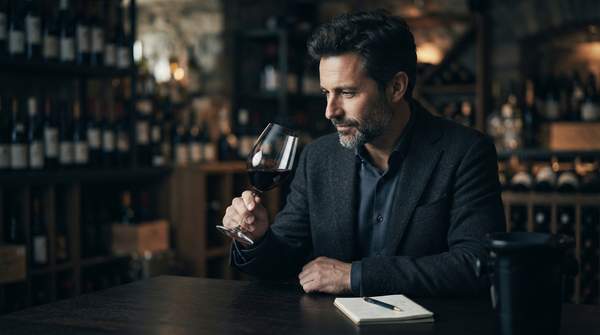
The flavor of wine is not in the bottle. It is constructed in your brain, moment by moment, from signals arriving through every sense you own — and that means you can deliberately change how a wine tastes without changing the wine at all. Dim the lights to a particular color, choose the right music, pour into the right glass, and manage what you know about the price, and the same liquid will deliver a measurably different experience. Here is the science of why, and a practical framework for doing it yourself.
The Brain's Vineyard: How Flavor is Truly Created
Neuroscientist Gordon M. Shepherd of the Yale School of Medicine coined the term "neurogastronomy" for the study of how the brain creates flavor, and applied it to wine in a paper titled "Neuroenology: how the brain creates the taste of wine," published in the journal Flavour. His central claim is disarmingly simple: "flavor is not in the food; it is created by the brain, through multiple sensory, motor, and central behavioral systems." Shepherd draws an analogy with vision — color is not in wavelengths of light but is constructed by neural circuits from them. Flavor works the same way.
What does that construction look like in the brain? Reporting on the field for BrainFacts.org, Bella Isaacs-Thomas describes how the pieces divide and then converge. Basic tastes — sour, sweet, bitter, salty, and umami — are processed in the anterior insula. Smell is handled in the amygdala-hippocampal complex and the piriform cortex. The trigeminal nerve, working with touch receptors in the mouth, registers temperature, astringency, and general mouthfeel. All of these signals are then integrated in the orbitofrontal cortex, which generates the flavor of the wine itself — and, crucially, also codes the experience as good or bad.
That last detail matters enormously for our purposes. The brain region assembling your wine's flavor is the same region assigning it a value. Perception and judgment are not separate steps; they are one process. This is why a cue that changes how much you expect to enjoy a wine can change what you actually taste.
Seeing Taste: The Visual Influence on Wine Perception
Vision gets to your verdict first. Neuroscientist Gabriel Lepousez, writing for the Wine Scholar Guild, describes the "predatory" influence of our eyes on the taste of wine: color creates an attentional bias that selectively enhances focus on red wine-associated aromas while inhibiting the analysis of white wine-associated flavors. The brain builds its coherent picture of the wine on the framework that visual cues establish before the liquid ever reaches your lips.
The classic demonstration is stark. A 2001 study showed that dyeing a white wine red caused tasters to describe it, erroneously, as having the qualities of a red wine. Trained tasters did not see through the trick; their eyes overwrote their tongues. Ambient lighting matters too: research reviewed by Oxford's Charles Spence and colleagues shows that changing the color of the lighting can change the wine tasting experience itself. The environment you see your glass in is part of the flavor.