You’re standing in front of the mirror, fiddling with the shoulders of a suit that felt "fine" in the store. But here, in the harsh light of your office before a career-defining meeting, "fine" suddenly feels like a liability. The shoulders pinch, the jacket’s waist doesn’t quite follow your form, and the whole effect is less commanding and more… constricted.
Solving this exact problem is what Los Angeles-based Woody Wilson has built a 20-plus-year reputation on, not with simple tailoring, but with a philosophy they call "Architectural Fit."
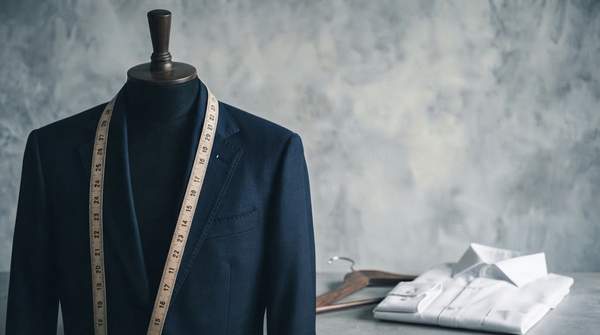
Most people assume a custom suit is all about precise measurements. While that's the start, it's nowhere near the whole story. The real difference, the source of that intangible "Presence," comes from details that a measuring tape can't capture. It’s about how a garment is engineered to work with a body in motion. Let's look at three often-overlooked details that are central to this philosophy.
1. The Shoulder Line as a Structural Foundation
Think about photos of powerful figures, from George Clooney on the red carpet to a CEO in an annual report. Their suit jackets don't just sit on their shoulders; they build from them. A standard suit has a shoulder built for a generic mannequin.
An Architectural Fit, on the other hand, treats the shoulder line as the foundational beam for the entire garment. This isn't about adding padding. It’s about the angle, the pitch, and creating a clean, unbroken line from the collar to the tip of the shoulder.
This is the essence of silhouette enhancement tailoring. By engineering the shoulder to either broaden a narrow frame or give structure to a more powerful one, the suit creates a visual V-shape that telegraphs strength and confidence. It’s a subtle, almost subliminal detail, but it’s the main reason a Woody Wilson suit on clients like Dwayne Johnson or Magic Johnson looks less like clothing and more like a second skin sculpted for authority.
2. The Geometry of the Button Stance
The "button stance" is simply the placement of the top button on a suit jacket. To most of us, it's a functional afterthought. To a master tailor, it’s the epicenter of the suit's entire geometry.
Placing it just a half-inch too high or too low can throw off the visual balance, making someone look shorter, wider, or disproportionate. This is one of the most common mistakes you'll find in even expensive off-the-rack suits.
The Woody Wilson process obsessively centers the button stance at the natural waist, which creates the most flattering lines for the torso. This single point dictates how the lapels roll, how the fabric drapes, and where the eye is naturally drawn.
It defines the waistline, elongates the legs, and makes sure the jacket closes cleanly without pulling or bunching, whether you're standing or sitting. It's a tiny detail with an outsized impact on creating commanding presence clothing.
3. The "Clean" Back and The Blade
If you turn around in a typical suit, you'll often see fabric bunching around the shoulder blades or horizontal stress lines pulling across the upper back. That happens because the pattern was cut for a static, two-dimensional shape. An architectural approach, however, considers the three-dimensional movement of the human body, especially the "scapula," or shoulder blades.
The key is to carve out just enough room for the blades to move without leaving a lot of excess baggage when your arms are at rest. The goal is a perfectly "clean" back: a smooth, uninterrupted drape of fabric from collar to hem.
This detail demonstrates an extremely high level of luxury garment construction and is a hallmark of true bespoke work. It ensures you look just as composed and powerful from the back as you do from the front, a critical detail in any boardroom or on any stage.
What is the Difference Between Bespoke and Made-to-Measure Suits?
People often use these terms interchangeably, but for a buyer, the distinction is critical. Understanding the difference makes it clear why a true bespoke process, like the one at Woody Wilson, delivers a fundamentally different product.
- Pattern Creation: A made-to-measure suit starts with a pre-existing template or "block" pattern that gets adjusted to your measurements. The bespoke tailoring process, in contrast, means your pattern is drawn from scratch on paper, based on dozens of measurements and observations of your posture. It is unique to you.
- Level of Customization: Made-to-measure gives you a menu of options, like lapel style or pocket type. Bespoke offers nearly infinite control over every single detail, from the buttonhole stitching to the precise lapel width and gorge height, with the tailor guiding you on what best suits your frame.
- Fittings: A made-to-measure suit usually involves one fitting, maybe two. The bespoke process requires multiple fittings (basted, forward, and fin bar fin), where the unfinished garment is literally sculpted on your body. This is where the real architectural work happens.
It’s the difference between altering a pre-existing design and engineering a new one from the ground up. That's why top executives and Hollywood A-listers in Los Angeles consistently choose the bespoke route.
How is Technology Like AI Changing the Bespoke Tailoring Industry?
The custom clothing market is growing fast, with projections from industry forecasts showing the global market is on track to reach $163.31 billion by 2035, driven by increasing consumer demand for personalization and digital tailoring. A huge driver of this expansion is technology. While you might picture old-world workshops, forward-thinking houses are embracing innovation to improve both precision and the client experience.
Woody Wilson calls itself "the world's first AI-integrated bespoke tailoring house." While hand-craft is still at the core of what they do, AI bespoke tailoring helps analyze measurements and postural data with a precision that complements the master tailor's eye. It can spot subtle asymmetries or model how different fabrics will drape on a client's body before a single cut is made.
This blend of artisanal skill and data-driven analysis helps reduce errors and perfect the fit. It’s a quiet but powerful tool working behind the scenes to elevate the final product. This embrace of technology also includes offerings like Cronoskin tailoring, a unique service for creating bespoke skins for humanoid robotics, which signals a clear focus on the future.
Is a Woody Wilson Bespoke Suit Worth the Investment?
Let’s be direct: with suits starting at $2,600, a Woody Wilson garment is a serious investment. So, is it worth it? For the C-suite executive, celebrity, or entrepreneur whose personal brand is a strategic asset, the answer is a definitive yes.
The premium price reflects more than fabric and labor. It pays for over 20 years of tailoring expertise focused entirely on the unique needs of high-profile leaders. This elite level of service is best highlighted by their Executive Wardrobe Management program, a tailored subscription package built specifically for time-starved professionals.
Ultimately, this is not just a clothing purchase. It is an investment in the authority you project, the hours saved through expert guidance, and a wardrobe built to last for a decade rather than a single season.
Presence is Not an Accident, It is Engineered
The difference between a suit that looks fine and one that commands a room is rarely visible at first glance. It lives in the angle of the shoulder line, the placement of a single button, the way fabric moves cleanly across the back. These are not cosmetic details. They are structural decisions that either work for you or quietly work against you every time you walk into a room.
For executives, celebrities, and anyone whose appearance is part of their professional currency, a bespoke garment from Woody Wilson is not an indulgence. It is a calculated investment in the impression you leave before you say a word.