For collectors, ensuring the long-term preservation of valuable art requires more than a secure room; it demands a specialized environment where climate, security, and structural integrity are managed with scientific precision. High-quality art storage facilities achieve this by integrating sophisticated environmental controls with multi-layered security protocols. Understanding these systems is crucial for any collector tasked with safeguarding their collection from the irreversible damage caused by environmental fluctuations and security threats.
The stakes are high, as improper storage can inflict a host of harms. According to fine art services company Atelier 4, potential consequences include "warping, cracking, and paint delamination," "mold growth and biological damage," and "structural stress to frames, mounts, and supports." To prevent such deterioration, premier facilities deploy a combination of advanced technology, resilient infrastructure, and rigorous operational procedures. This guide provides a comprehensive framework for evaluating these essential features, enabling collectors to ask informed questions and select a facility that meets the exacting standards their collection deserves.
Environmental Preservation: Climate Control and Disaster Proofing
The most fundamental service a fine art storage facility provides is the stabilization of the environment. Art Work Fine Art Services notes that fluctuations in temperature and humidity can cause irreversible harm to sensitive materials like wood, textiles, and paper. To combat this, top-tier facilities maintain a consistent climate year-round. The industry standard, according to Art Work Fine Art Services, is a stable temperature between 70 and 72 degrees Fahrenheit and a relative humidity of around 50%. Skyframe, another provider, specifies its systems maintain a temperature of approximately 70 degrees and 50% humidity, with a tight tolerance of plus or minus two degrees.
Beyond maintaining these specific levels, consistency is paramount. Constant, minor adjustments by a high-performance system are superior to the wide swings that can occur in less-specialized environments. These climate-controlled systems are engineered to preserve both the physical integrity and the long-term value of the works they protect.
Air quality is another critical factor in preservation. State-of-the-art HVAC and air-filtering technologies, such as those mentioned by Bellissima Fine Art Services, are essential for removing pollutants, dust, and other airborne contaminants that can settle on and degrade artwork over time. These systems work in concert to create a controlled micro-environment, shielding collections from the subtle but persistent threats present in unfiltered air.
Multi-Layered Security: Protecting Against Unauthorized Access
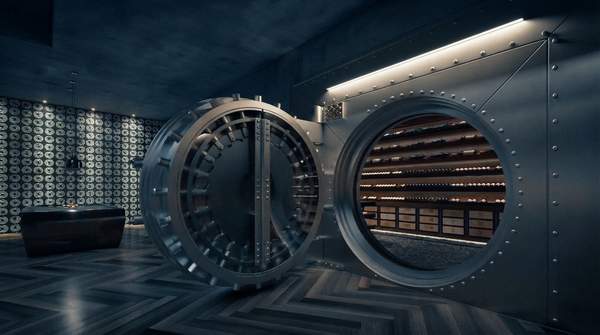
A facility's security is best understood as a series of concentric circles, each providing a different layer of protection against theft, damage, and unauthorized access. These systems are designed to control entry, monitor all activity, and provide immediate alerts in the event of a breach. According to storage provider Wetzel & Sons, comprehensive security features include electronic access control, intruder alarms, fire detection systems, and constant surveillance through CCTV, sound monitoring, and a central station link.
Access control forms the first line of defense. Facilities often employ electronic systems and may require stringent identity verification, such as the TSA ID checks used by Atelier 4. A critical policy at many high-security locations is the prohibition of unescorted access to shared storage spaces, ensuring that no individual is ever alone with the collections. This operational protocol is a key distinction from "self-storage" models. In a managed storage system, as described by Bellissima Fine Art Services, the facility's professional staff handles all packing, transport, and placement of valuables, maintaining a strict chain of custody.
Continuous monitoring provides another essential layer of protection. This typically involves 24/7 CCTV video surveillance and sound monitoring, as noted by Wetzel & Sons. These systems are often linked to a central surveillance station that can dispatch authorities at a moment's notice. Alarms for intrusion and fire are fundamental, with many facilities using systems that are UL-certified, a key independent indicator of quality and reliability.
The Critical Role of Redundancy and Facility Resilience
Even the most advanced systems can fail, which is why redundancy is a hallmark of a superior art storage facility. Redundancy means having backup systems for all critical functions to ensure continuous protection during power outages, equipment malfunctions, or other emergencies. As the design firm GHT notes, emergency power is essential for maintaining both the environmental controls and the security systems that safeguard valuable collections during a power outage.
A robust emergency power plan is non-negotiable. Bayshore Fine Art notes its warehouse is equipped with a full generator capable of powering the entire building. Bellissima Fine Art Services states its facility has an onsite generator powerful enough to maintain optimal temperature and conditions for up to two weeks during a power disruption. This capability ensures that climate control, surveillance, and alarms remain fully operational no matter the external circumstances.
The principle of redundancy extends beyond power. Bayshore Fine Art reports building "additional redundancy into every aspect of our operations," including dual alarms for security and backup systems for temperature and humidity control. This commitment to fail-safes is a crucial aspect of risk mitigation. This resilience also applies to the physical structure of the building itself. Some facilities are built with exceptional fortitude, such as Bellissima's Category 5 hurricane-rated concrete construction, designed to withstand wind gusts of up to 200 mph. Bayshore Fine Art employs a unique "box in a box" system, constructing two-story buildings inside its larger warehouses so that no artwork is ever in contact with an exterior wall, providing an extra layer of insulation and security against physical and environmental threats.
Art Storage Evaluation Checklist
When assessing a potential storage provider, collectors can use this checklist to ensure all critical aspects of preservation and security are addressed. It consolidates key features and standards described by industry professionals and facility operators to guide a thorough evaluation.
| Feature Category | Key System or Protocol | What to Look For |
|---|---|---|
| Environmental Controls | Temperature & Humidity | Stable temperature between 70–72°F and relative humidity around 50%. Ask for data logs demonstrating consistency. |
| Environmental Controls | Air Quality | Advanced HVAC and air filtration systems designed to remove dust, pollutants, and other airborne contaminants. |
| Security Systems | Access Control | Electronic access systems, mandatory ID checks (e.g., TSA-level), and a strict policy against unescorted access. |
| Security Systems | Surveillance | 24/7 monitoring, including CCTV, sound monitoring, and a direct link to a central surveillance station for immediate response. |
| Security Systems | Alarms | UL-certified intruder and fire detection systems. Inquire about alarm redundancy and response protocols. |
| Facility Resilience | Backup Power | On-site generator capable of powering the entire facility, including all climate and security systems, for an extended period (e.g., one to two weeks). |
| Facility Resilience | Building Construction | Disaster-resistant construction (e.g., hurricane-rated) and specialized designs like "box in a box" systems that isolate art from exterior walls. |
| Operational Protocols | Staff Vetting | Thorough background checks for all employees (e.g., STA background checks) who have access to storage areas. |
| Operational Protocols | Handling & Access Model | A managed storage model where trained staff handle all art movement, as opposed to a self-storage model. |
Making an Informed Choice for Your Collection
The long-term preservation of a valuable art collection depends on selecting a storage partner that demonstrates an uncompromising commitment to environmental stability, security, and resilience. To make the right choice, collectors should thoroughly evaluate potential art storage facilities against a comprehensive checklist of environmental controls, security systems, facility resilience, and operational protocols. The most reputable providers will not only have these systems in place but will be transparent about their specifications, maintenance schedules, and performance history.
Ultimately, a facility's ability to provide detailed documentation and transparent answers regarding its systems, redundancy measures, and operational procedures is the best indicator of its quality and reliability. By conducting this due diligence, asking specific questions based on the features outlined here, and demanding clear evidence of a facility's capabilities, collectors can secure peace of mind and ensure their treasured works are protected for generations to come.