A machine-learning technique can estimate an EV's battery health with under 2% error, even using only partial charging data, revealing a hidden layer of intelligence optimizing your electric vehicle. This precision ensures vehicles maintain their peak performance longer, quietly extending their lifespan and reliability for owners. Such advancements in electric supercar battery performance and charging innovations are reshaping expectations for 2026 and beyond.
Consumers experience a straightforward charging process, but behind the scenes, complex machine learning models are constantly optimizing every aspect of battery health and energy delivery. This creates a disconnect: the simple transaction masks a sophisticated dance of data and algorithms, working to maintain vehicle integrity.
The future of electric vehicles will be defined not just by battery chemistry, but by the unseen algorithms that manage and predict their performance, leading to more efficient, reliable, and personalized driving experiences.
A machine-learning technique for online Li-ion battery state-of-health estimation in EVs achieved under 2% error, even using partial charging curves and similarity factors, according to Nature. The precision in battery health monitoring highlights the critical, often invisible, role of AI in modern EVs. Such accuracy means potential battery issues can be identified proactively, long before they affect a driver's experience.
The capability to estimate battery health shifts maintenance from reactive fixes to predictive interventions. The ability to estimate battery health with minimal data implies that EV manufacturers and charging networks could proactively identify potential battery issues long before they impact user experience, shifting maintenance from reactive to predictive. The shift from reactive to predictive maintenance represents a significant advantage for both vehicle longevity and consumer confidence.
The AI Revolution Under the Hood
The Random Forest model outperformed other machine learning models in forecasting EV battery charging cycles, according to nature.com. The specialized AI approach indicates that different aspects of EV management require tailored machine learning toolkits, moving beyond a one-size-fits-all solution.
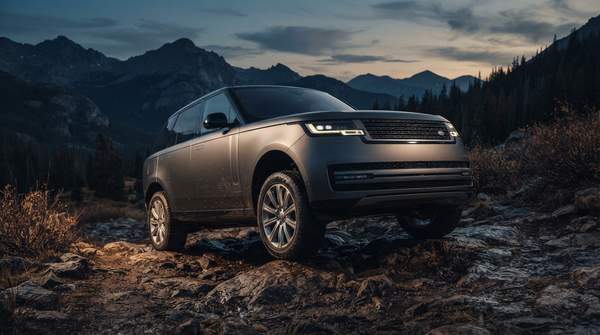
An ensemble learning model integrates historical charging data with weather, traffic, and local events to enhance prediction accuracy for EV session duration and energy consumption, also reported by nature.com. The integration of diverse data by ensemble learning models suggests future charging infrastructure could dynamically adjust energy distribution and pricing in real-time, moving beyond static pricing models to highly optimized, personalized charging experiences. Advanced AI models are transforming how EV batteries are managed and how charging infrastructure predicts demand, leading to more efficient and reliable electric mobility.
Smart Charging for the Savvy Driver
The EVgo Plus™ plan costs $6.99/month and includes 15% charging credits with no session fees, according to EVgo. The EVgo Plus™ plan offers a clear incentive for frequent users to reduce their per-charge costs, directly impacting the economic aspect of EV ownership.
Alternatively, EVgo's Pay As You Go plan costs $0/month with $0.99 session fees and includes 0% charging credits, according to EVgo. For drivers using Electrify America, signing up as a Pass+ member via their mobile app can save about 25% on charging, Electrifyamerica states. Varied options like EVgo's Pay As You Go plan and Electrify America's Pass+ membership highlight that by understanding and utilizing various charging plans and memberships, EV owners can significantly reduce their operational costs and enhance convenience. Companies like EVgo and Electrify America, currently competing on flat-rate discounts, are missing a significant opportunity to utilize advanced ML for dynamic, value-based pricing and predictive services, leaving a vast technological gap between their offerings and the underlying capabilities.
Ensuring Safety and Reliability
EVSE standards require a secure connection between the vehicle and charging station before power transmission to prevent electrical shocks, according to Tek. The fundamental requirement of EVSE standards for a secure connection ensures user safety during the charging process, a critical factor for widespread EV adoption. Strict safety protocols and standards are fundamental to the widespread adoption of EV charging infrastructure, ensuring user protection and system integrity.
While advanced machine learning optimizes battery health and charging efficiency, the foundational safety measures remain paramount. EVSE standards provide a baseline of protection, allowing consumers to confidently use charging infrastructure as it becomes more sophisticated and data-driven. The ongoing integration of AI into charging systems must always operate within these established safety frameworks.
Forecasting the Future of EV Adoption
What role does AI play in forecasting EV sales?
AI models are crucial for predicting market trends and guiding future industry investments. For instance, a hybrid LSTM and Convolutional LSTM model achieved superior performance with an acceptable error margin of 3.5% in forecasting electric vehicle sales in Colombia, according to nature.com. The precision of a hybrid LSTM and Convolutional LSTM model in forecasting electric vehicle sales helps manufacturers and investors make informed decisions.
How accurate are AI models for predicting EV sales?
Accuracy varies by model and dataset, but advanced techniques show high reliability. Automated Machine Learning (AutoML) by a hybrid model was used to estimate EV sales, utilizing a dataset of 357 newly manufactured cars in the U.S. between 2014 and 2020, as reported by nature.com. The use of Automated Machine Learning (AutoML) by a hybrid model demonstrates the capability of AI to analyze historical data for future projections.
What are the key performance metrics for electric supercar batteries?
Key metrics include health estimation, charging cycle forecasting, and energy consumption prediction. Machine learning models like Random Forest excel in forecasting battery charging cycles, while ensemble learning models predict session duration and energy consumption with enhanced accuracy by integrating diverse data like weather and traffic, according to nature.com. The holistic approach of using machine learning models like Random Forest and ensemble learning models ensures optimal battery performance.
The Intelligent Road Ahead
The integration of sophisticated AI across battery management, charging networks, and market analysis is paving the way for a more intelligent, efficient, and widely adopted electric vehicle future. Consumers benefit from optimized battery health and predictive maintenance, often without realizing the complex algorithms working behind the scenes. The integration of sophisticated AI moves the focus from simply providing power to intelligently managing an entire energy ecosystem.
The precision of ML in estimating battery health, with under 2% error using partial data, suggests that future EV warranties and resale values will increasingly be determined by real-time, AI-driven diagnostics rather than mileage or age. The determination of future EV warranties and resale values by real-time, AI-driven diagnostics alters the economics of EV ownership. The integration of environmental and behavioral data by ensemble learning models for charging prediction implies that the next generation of charging infrastructure will not just deliver power, but intelligently manage energy grids and consumer demand, transforming charging from a utility into a smart service.
By 2026, companies like Electrify America and EVgo will likely expand their offerings beyond simple pricing plans, driven by the imperative to employ advanced machine learning for dynamic, value-based services. The competitive battleground will shift towards those who can best integrate these invisible intelligence layers into a seamless customer experience, changing how we interact with electric vehicles.