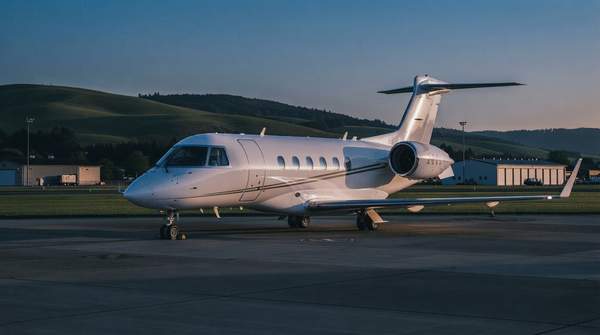
Private aviation is not one product but three distinct ways to buy the same experience, and the right choice depends almost entirely on how many hours you fly each year and how much financial commitment you are willing to make upfront. On-demand charter charges you per trip with no membership fees; jet card programs require large prepaid deposits, typically $100,000 to $500,000 or more, in exchange for fixed hourly rates and guaranteed availability; fractional ownership adds maintenance, management fees, and depreciation on top of a share in the aircraft itself. Below, I walk through each model, decode what actually appears on a charter invoice, and close with a comparison table you can use to match a model to your travel pattern.
On-Demand Charter: Flexibility Without Commitment
On-demand charter is the purest expression of private flying: you request a specific flight, and the operator quotes it based on availability and your itinerary. There are no membership fees and no long-term contracts, which makes it the model Jettly describes as appealing to "travelers who want a bespoke experience without the capital commitment of whole-aircraft ownership or the restrictions that can come with some fixed fleet programs."
The trade-off is price volatility. Because quotes are dynamic and depend on real-time market conditions, the same route can cost meaningfully different amounts depending on when you book and which aircraft is available. Paramount Business Jets' 2026 route estimates illustrate the spread: roughly $6,000 for a short regional hop such as Miami to Nassau on a turboprop, versus $250,000 or more for an ultra-long-range intercontinental flight like Dubai to Sydney. Hourly rates across the market range from about $1,200 to more than $18,000 depending on aircraft class, route, and services.
For infrequent flyers or those with unpredictable schedules, that volatility is a fair price for total freedom. Stratos Jet Charters puts the threshold plainly: for most travelers flying fewer than 50 to 75 hours per year, on-demand charter is significantly more cost-effective than the alternatives, because you pay market rates per trip with no upfront commitment.
Jet Card Programs: Pre-Paid Hours and Fixed Rates
A jet card flips the charter logic: instead of paying per trip at whatever the market bears, you purchase a block of flight hours in advance, often at discounted or fixed hourly rates. Programs typically guarantee availability within a specified service area and aircraft category, which is the real product you are buying—certainty that an aircraft will show up when you call.
The cost structure involves an upfront payment for the hours, sometimes an annual or monthly fee on top, and fixed hourly rates that make budgeting more predictable than on-demand charter. That predictability still has limits: pricing remains subject to surcharges, and the commitment is for a set number of hours over a defined period. If your flying drops off mid-term, you have capital sitting idle in a prepaid balance.
Paramount Business Jets describes its jet card memberships as leveraging direct wholesale operator rates plus a low, fixed, transparent management fee—one illustration of how the model works when the provider's incentives align with the client's. Jet cards suit individuals and businesses with moderate, consistent travel needs—roughly 25 to 100 hours annually—who value guaranteed availability and consistent pricing over maximum flexibility.