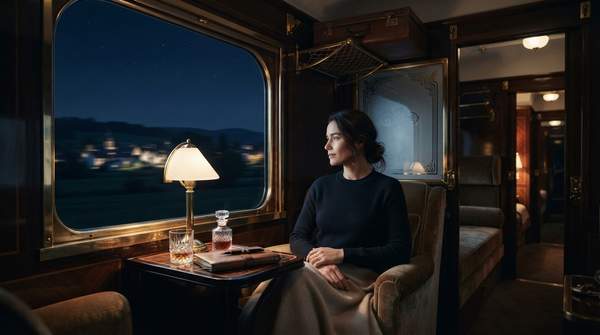
Choosing a luxury train journey is less about picking the "best" train and more about picking the right shape of journey. Every one of these trips is genuinely distinctive—as one specialist ticketing guide puts it, "you can't really compare one trip to another, because each is truly unique"—but they still differ along three predictable axes: where the itinerary takes you, how much space you sleep in, and what the onboard experience is built around. Answer those three questions and the shortlist narrows itself.
What almost every journey shares is the all-inclusive structure. Once the ticket is purchased, most of the itinerary is covered: multi-course meals prepared on board, drinks, and often curated excursions such as private tours of stately homes, gardens or distilleries. The differences lie in scale. A one- to three-night sleeper in a private cabin sits at one end of the market; week-long itineraries with ultra-spacious suites and even onboard spas sit at the other. This guide walks through the three decision areas, using named trains as illustrations rather than verdicts.
Choosing Your Luxury Train Journey: A Decision Framework
Before browsing departures, build a profile of the journey you actually want. The first decision area is itinerary style: is the point of the trip deep immersion in one region, or the sweep of a long, multi-country route? The second is accommodation: a compact private cabin with an en-suite shower is a very different purchase from a Grand Suite with a dressing table and butler service. The third is onboard focus: some trains are essentially restaurants on wheels with regionally driven menus, while others build the journey around excursions, spa treatments or the social life of the lounge car.
These three areas interact. A longer transcontinental route makes cabin comfort more consequential—you will spend more nights aboard—while a short regional journey can afford to be more about the destinations than the sleeping arrangements. Similarly, a train with a Michelin-starred culinary vision behind its menus invites a different kind of traveller than one whose signature element is seasonal itinerary changes. Hold each of the three questions in mind as you read the sections below, then assemble your answers into the framework at the end.
Itinerary Style: Regional Immersion vs. Transcontinental Expeditions
Itinerary length and geographic scope are the first filter. At the compact end, the Belmond Hiram Bingham makes a 3.5-hour run between Cusco and Machu Picchu daily except Sunday—a day-trip scale of luxury where the train is a glamorous corridor to a single destination. In the middle sit regional immersions. The Belmond Royal Scotsman explores Scotland on journeys that can be combined into an eight-day itinerary, while an Italian luxury train—described by travel writer Federica Rustico—offers about eight itineraries across the country, from one to four nights, linking Venice, Portofino, Matera, Palermo and the Tuscan countryside, with departures from a private lounge at Rome Ostiense station.
At the expansive end is genuine transcontinental travel. The Eastern & Oriental Express runs 1,262 miles between Singapore, Malaysia and Bangkok, threading three countries into a single journey. The practical trade-off is simple: longer routes mean more nights aboard, more meals, more time to explore destinations along the way—and, as the ticketing guide notes, a correspondingly higher price. A regional journey leans into place; the Italian train's menus change depending on where it is, and excursions might take you into a Tuscan wine estate or a tiny coastal village. A transcontinental journey leans into distance and variety. Decide which of those two pleasures you are actually buying.