More than half of Gen Z respondents fund their own trips entirely, and nearly half plan everything themselves, according to TTG Asia. This level of financial autonomy and meticulous self-planning among young travelers in the Asia Pacific region marks a significant departure from previous generations, who often relied on family or pre-packaged tours for their luxury experiences. It paints a vivid picture of a generation taking firm control of their travel narratives, meticulously curating every moment to align with their personal values and aspirations. Their independent approach extends to every detail, from destination selection to daily activities, reflecting a deep desire for personalized journeys that resonate with their individual identities.
But: Gen Z is often perceived as reliant on others for travel, yet they are increasingly self-funding and independently planning sophisticated luxury trips. This common stereotype clashes sharply with the emerging reality, where this demographic demonstrates a clear preference for control and personalization over traditional, pre-arranged itineraries. The disconnect highlights a crucial misunderstanding within the travel industry regarding the capabilities and preferences of this powerful consumer group, often underestimating their capacity for independent, sophisticated travel planning.
The Asia Pacific luxury travel market is likely to see a significant shift towards bespoke, experience-driven offerings, with traditional players needing to rapidly innovate their engagement and product strategies to capture this influential demographic. This transformation stems directly from Gen Z's self-funded, hyper-individualized pursuit of authentic cultural immersion and wellness, which is rendering standardized luxury travel packages irrelevant and forcing a radical redefinition of 'luxury' in the region. The industry's ability to adapt to these evolving demands will determine its future success in attracting this discerning and empowered generation.
More than half of Gen Z respondents fund their own trips entirely, and nearly half plan everything themselves, according to TTG Asia. More than half of Gen Z respondents fund their own trips entirely, and nearly half plan everything themselves, fundamentally differentiating Gen Z from previous generations of luxury travelers. It signals a powerful consumer segment that actively shapes its own experiences rather than passively consuming pre-determined offerings. This independence is not merely about finances; it extends to a profound self-reliance in itinerary creation, destination research, and activity selection, underscoring a generation that values personal agency above all else in their journeys. They are not waiting for others to define their adventures; they are crafting them with precision and purpose.
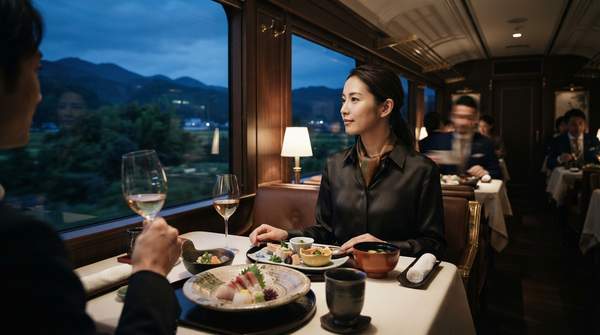
This demographic, often stereotyped as financially dependent or less capable of independent travel, is in fact demonstrating a strong capacity for sophisticated, self-curated luxury trips. Their preference for hands-on planning means they are actively seeking out unique opportunities that resonate with their individual interests, moving away from generic, one-size-fits-all luxury packages. This shift demands that travel providers engage with Gen Z on their terms, offering flexibility and customization rather than rigid structures. It compels the industry to acknowledge a generation that prioritizes meaningful engagement and personal discovery over ostentatious displays, challenging long-held assumptions about luxury consumption.
The Active and Independent Gen Z Traveler
Gen Z takes an average of 3.2 domestic trips and 2.9 international trips annually, according to TTG Asia. Gen Z takes an average of 3.2 domestic trips and 2.9 international trips annually, underscoring their active engagement with exploration and discovery. Their journeys are often self-funded, with more than half of Gen Z respondents financing their own trips entirely, as reported by TTG Asia. More than half of Gen Z respondents financing their own trips entirely allows them greater freedom in choosing destinations and experiences, bypassing traditional gatekeepers and enabling a broader range of personalized adventures.
- 3.2 — domestic trips annually taken by Gen Z travelers, according to TTG Asia.
- 2.9 — international trips annually taken by Gen Z travelers, according to TTG Asia.
- More than half — of Gen Z respondents finance their own trips entirely, according to TTG Asia.
- Nearly half — of Gen Z respondents plan their entire trips themselves, according to TTG Asia.
Gen Z's average of 3.2 domestic and 2.9 international trips annually, with more than half self-funding and nearly half planning their own trips, indicates that Gen Z is not only a frequent traveler but also a financially independent one, making them a crucial segment for the Asia Pacific luxury market. Their ability to fund and plan their own extensive travel schedule highlights a demographic that is both engaged and empowered, demanding offerings that align with their self-sufficient approach. This independence challenges the traditional notion of luxury travel as something exclusively curated and provided by external entities, pushing for a model where the traveler's agency is central. The sheer volume of their travel, combined with their self-reliance, signifies a robust market force with distinct preferences that cannot be overlooked.
Experience-Driven Priorities: Culture, Cuisine, Nature, Wellness
Engagement with local communities and cultural immersion are paramount for Gen Z travelers in the Asia Pacific. These elements are the most important factors for 87% of Gen Z in choosing travel destinations, according to TTG Asia. This strong preference extends to affluent Gen Z respondents, with cultural immersion and engagement with local communities influencing destination choice for 87% of them, as stated by BMI. Their interests further encompass culinary discovery, proximity to nature, and wellness, each influencing 86%, 86%, and 85% of affluent Gen Z travelers respectively, according to BMI. These statistics paint a clear picture of a generation that values profound, enriching experiences over traditional markers of luxury.
| Experiential Priority | Influence on Affluent Gen Z Destination Choice (2026) |
|---|---|
| Cultural Immersion & Local Engagement | 87% |
| Culinary Discovery | 86% |
| Proximity to Nature | 86% |
| Wellness | 85% |
footnote: Data compiled from TTG Asia and BMI reports on Gen Z luxury travel preferences.
Cultural immersion and local engagement (87%), culinary discovery (86%), proximity to nature (86%), and wellness (85%) highlight a profound shift from traditional luxury amenities to authentic, enriching experiences that connect travelers with local culture, cuisine, nature, and personal well-being. The data clearly shows that for Gen Z, luxury is defined not by opulence or exclusive services in isolation, but by the depth and authenticity of the experience itself. Traditional luxury providers who continue to offer standardized, amenity-focused packages are fundamentally misreading the market, risking irrelevance as Gen Z defines luxury through authentic, self-curated experiences, as evidenced by 87% prioritizing cultural immersion, according to TTG Asia. The desire for genuine encounters means that generic five-star hotels with predictable offerings will struggle to capture the imagination of this discerning demographic, who seek out local homestays, artisanal food tours, and eco-conscious adventures instead.
Values Driving Destination Choices
Gen Z's deep-seated values for authenticity, well-being, and personal growth are directly translating into their travel choices, making experiences paramount. Their desire to genuinely engage with local communities, influencing destination choice for 87% of affluent Gen Z respondents, according to BMI, stems from a generation that values connection and understanding. This goes beyond superficial tourism, seeking meaningful interactions that broaden their perspectives and offer a true sense of place. They aspire to understand the fabric of a destination, conversing with locals and participating in traditions, rather than observing from a distance.
Wellness influences destination choices for 85% of affluent Gen Z respondents, according to BMI, reflecting a broader societal trend towards holistic health and self-care. For this demographic, travel is not merely an escape but an opportunity for rejuvenation and personal betterment, whether through yoga retreats in Bali or silent meditation in a Japanese temple. Similarly, culinary experiences and nature access, influencing 86% of affluent Gen Z respondents each, according to BMI, underscore a quest for sensory enrichment and environmental connection. These are not just activities but integral components of a well-rounded and deeply satisfying travel experience, where the taste of local street food or the view from a mountain peak holds more value than gilded hotel lobbies. The overwhelming preference for cultural immersion, culinary discovery, nature, and wellness among affluent Gen Z (85-87% according to BMI) proves that the new currency of luxury travel is not opulence, but profound, personalized experiences that enrich the traveler. The overwhelming preference for cultural immersion, culinary discovery, nature, and wellness among affluent Gen Z (85-87% according to BMI) proves that the new currency of luxury travel is not opulence, but profound, personalized experiences that enrich the traveler, signaling a market that values intrinsic worth and personal transformation over extrinsic displays of wealth.
Industry's Response: Segmenting the New Luxury Traveler
Major hospitality players are actively segmenting and analyzing Gen Z's diverse preferences, signaling an industry-wide recognition of this demographic's significant and varied impact. Marriott's Asia Pacific report identifies four distinct Gen Z luxury traveler segments.ury travel profiles, according to Marriott’s New Luxury Playbook: Four Gen Z Mindsets Are Reshaping Travel. This segmentation moves beyond simplistic demographic labels, acknowledging the nuanced motivations and behaviors within this generation. It signifies a strategic effort to understand the various facets of Gen Z's luxury travel aspirations, from the adventurous explorer seeking off-the-beaten-path experiences to the wellness devotee prioritizing restorative retreats.
By identifying these profiles, the industry can tailor offerings more precisely, moving away from generic luxury packages that fail to resonate with Gen Z's individualized demands. This approach allows for the development of bespoke experiences that cater to specific mindsets, ensuring relevance in a rapidly evolving market. Smaller, agile travel platforms and local experience providers are particularly well-positioned to capitalize on this trend, offering highly niche and authentic experiences that larger, more traditional operators struggle to replicate at scale. The recognition of these distinct profiles suggests that traditional luxury brands must fundamentally re-evaluate their value proposition, focusing on how their services can align with Gen Z's desire for authenticity, personalization, and transformative experiences rather than just lavish amenities or standardized services.
The AI-Powered Future of Gen Z Travel
Gen Z's early adoption of AI for travel planning signals a future dominated by self-curated, technology-enhanced journeys, bypassing traditional intermediaries.
- 23% of affluent Gen Z travelers are already using AI tools for travel inspiration and planning, according to BMI.
The rapid adoption of AI tools by Gen Z indicates a future where personalized, digitally-assisted travel planning becomes the norm, further empowering self-directed and tailored journeys. This demographic, comfortable with technology, leverages AI to discover unique destinations, optimize itineraries, and even manage bookings, creating highly customized trips that were once the domain of specialized travel agents. AI's capabilities, such as instant translation, personalized recommendation engines, and dynamic pricing alerts, allow Gen Z to craft intricate itineraries that perfectly match their individual preferences for cultural immersion, culinary exploration, and wellness activities. The 23% adoption of AI tools for travel planning by Gen Z (BMI) signals a rapid shift in how future travel is researched and booked, meaning providers who fail to integrate AI-powered personalization will be left behind by this self-sufficient demographic. This trend amplifies Gen Z's financial independence in travel, suggesting a future where self-curated itineraries, rather than pre-packaged tours, define luxury travel, potentially bypassing traditional intermediaries entirely and allowing for truly unique, hyper-individualized adventures.
Navigating the New Landscape of Luxury Travel
Understanding and adapting to Gen Z's unique blend of independence, digital fluency, and demand for authentic experiences is critical for success in the evolving Asia Pacific luxury travel market. Their preferences are clearly reshaping the definition of luxury itself, moving it beyond mere opulence to encompass profound personal growth and genuine connection.
- More than half of Gen Z respondents fund their own trips entirely, demonstrating significant financial independence in their travel choices.
- 87% of Gen Z travelers prioritize cultural immersion and engagement with local communities when selecting destinations.
- 23% of affluent Gen Z travelers currently use AI tools for travel planning, indicating a strong embrace of technology for personalized journeys.
The shift towards self-funded, self-planned, and experience-driven travel, augmented by technology, means that traditional luxury travel providers must radically rethink their offerings. Success for traditional luxury brands in the Asia Pacific region by 2026 will depend on their ability to integrate authentic, personalized experiences and embrace digital tools to meet Gen Z's evolving expectations. Companies like local tour operators offering bespoke culinary tours or boutique wellness resorts emphasizing local traditions are likely to thrive, while large, standardized luxury chains may see their market share erode if they do not adapt their offerings to this powerful demographic by mid-2026.