The real dividing line in top-tier adventure travel is not price. It is what a journey is built around: the depth of a culture, the severity of a landscape, or a deliberate blend of both. Drawing on descriptions from specialist operators and industry publications, the bespoke market currently offers at least three distinct models worth comparing—deep cultural immersion with Remote Lands in Mongolia, remote wilderness exploration in Patagonia, and a hybrid cultural-adventure journey in Georgia with Pelorus Travel. Understanding which model fits you is the first, and most consequential, decision in commissioning a truly tailored trip.
What "Bespoke" Actually Means at This Level
Bespoke travel, as travel industry sources describe it, is not a luxury tour with better hotels. It is an itinerary designed around a traveler's individual passions and personal pace rather than a pre-packaged route. The design process matters more than the amenity list: a genuine bespoke operator starts with who you are and what fascinates you, then builds every day around that, rather than selling you an existing product with a private guide attached.
Industry commentary aimed at ultra-high-net-worth travelers frames this shift as moving from accumulating destinations toward the quality of a single experience, and describes an aesthetic sometimes called "invisible luxury"—comfort and support so seamlessly arranged that the machinery of the trip disappears behind the experience itself. That standard is useful as a test when evaluating any operator: ask not what is included, but what was changed specifically for you.
Deep Cultural Immersion: Mongolia with Remote Lands
The Mongolia journey, described by Arc & Iveagh, a luxury lifestyle publication, invites travelers to trace the steps of ancient nomads. Remote Lands, the operator named for the experience, offers a private tour showcasing the nomadic lifestyle—an itinerary whose center of gravity is people and tradition rather than terrain. The landscape is vast, but it functions as a stage: what you travel for is proximity to a way of life that has endured across the steppe.
This is the archetype of the cultural-immersion model. Exclusivity here means private access—to families, festivals and daily rhythms that ordinary tourism observes only from a distance. The trade-off is deliberate: you accept remoteness and simplicity of infrastructure in exchange for authenticity that cannot be staged. If your definition of adventure is being changed by an encounter rather than challenged by an environment, this model fits. What the published description does not detail is the full extent of customization available beyond the core cultural program, so travelers should ask Remote Lands directly what can be adapted—guides, pacing, seasonal timing—before committing.
Remote Wilderness Exploration: Patagonia's Untamed Beauty
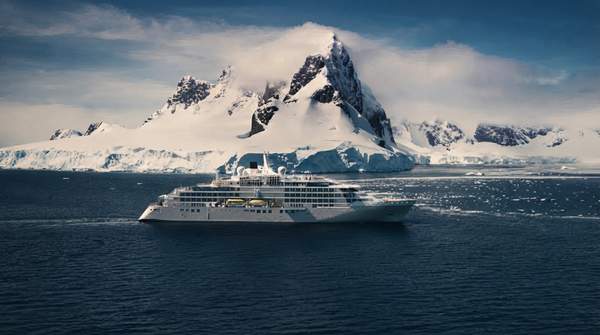
Patagonia represents the opposite pole. McCabe World Travel, a travel agency writing about luxury adventure destinations, describes the region as melding wild natural beauty with rich touches that craft an experience as breathtaking as it is relaxing. The exclusivity here is expressed through access engineered against geography itself: private tours of glaciers and helicopter rides over majestic peaks, offering a bird's-eye view of the spectacular terrain.
In the wilderness model, the landscape is the protagonist. The bespoke element lies in how the operator manages the tension between challenge and comfort—arranging private glacier access and aerial perspectives so that the untamed environment becomes approachable without being domesticated. McCabe's own framing is telling: adventure travel in this mode is described as "immersing in the luxury of the untamed," blending the thrill of exploration with what the agency calls unparalleled comfort. For travelers whose ideal journey is defined by scale, silence and physical spectacle, Patagonia is the reference case. The cultural layer is thinner by design; you go for what the land asks of you, not for what its people can teach you.
Hybrid Adventure: Georgia with Pelorus Travel
Georgia occupies the middle of the spectrum. Arc & Iveagh describes a Pelorus Travel journey through the Caucasus—a land between Eastern Europe and Western Asia, presented as still filled with mystique and vibrant cultural exchanges as they were over a millennium ago. The itinerary pairs cultural exploration with adventurous movement through dramatic terrain, and the publication's coverage notes the trip includes private heli-tours alongside its cultural experiences.
The hybrid model suits travelers unwilling to trade one dimension for the other. You move through mountains by helicopter in the morning and step into a living, layered culture by afternoon. That duality is also the model's complexity: a hybrid demands more of the itinerary designer, because two different kinds of access—privileged wilderness logistics and genuine cultural exchange—must be balanced rather than one serving as filler for the other. As with the Mongolia description, the published account does not enumerate every customization option, so a serious inquiry to Pelorus should probe how the cultural and adventure components are weighted and adapted to a client's interests.
Comparing Bespoke Adventure Travel Experiences
The framework below classifies the three evidence-supported experiences against consistent criteria—primary focus, the nature of their exclusivity, and the named operator—so you can match your own preferences to a specific trip type rather than a vague destination wish.
| Experience example | Primary focus (wilderness/culture) | Key feature of exclusivity | Named operator |
|---|---|---|---|
| Mongolia | Deep cultural immersion within a vast wilderness setting | Private access to a living nomadic lifestyle and its traditions | Remote Lands |
| Patagonia | Remote wilderness exploration | Private glacier tours and helicopter flights over the peaks | Described by McCabe World Travel; no single operator named |
| Georgia (Caucasus) | Hybrid: cultural exploration combined with adventure | Private heli-tours paired with cultural immersion | Pelorus Travel |
Read the table as a decision map. If cultural depth with private access is your priority, the Mongolian archetype fits. If extreme wilderness with luxury support is what you seek, Patagonia is the model to commission. If you want both in one journey, the Georgian hybrid is the template to negotiate around. Note the asymmetry in the operator column: Patagonia's exclusivity features are described by a travel agency in general terms for the region, whereas Mongolia and Georgia are tied to specific named operators, which affects how directly you can act on each lead.
Making Your Bespoke Adventure Choice
To select the ideal bespoke adventure, travelers should prioritize their preference for deep cultural immersion versus remote wilderness exploration, and consider the specific nature of exclusivity offered by different operators. The practical test is straightforward: write down which you would sacrifice first—cultural depth or wilderness challenge—and which form of privacy matters more, private access to people or private access to landscape. The answer should point you to one row of the framework above.
Two boundaries deserve honesty. Pricing is excluded here because costs vary widely with customization, and this analysis rests on descriptions from travel companies and industry publications rather than firsthand experience or independent testing. The measurable indicator of a good decision is a clear alignment between the traveler's stated preferences—cultural depth, wilderness challenge, level of privacy—and the characteristics of the chosen experience and operator. If, after an operator consultation, that alignment is explicit and documented in a proposed itinerary, the choice is sound; if it is not, keep asking until it is.
Sources
- LIVE YOUR ADVENTURE: 10 Most Unique Luxury Adventure Experiences for t — Arc & Iveagh
- Luxury Adventure Travel Destinations for 2024 — Mccabeworld