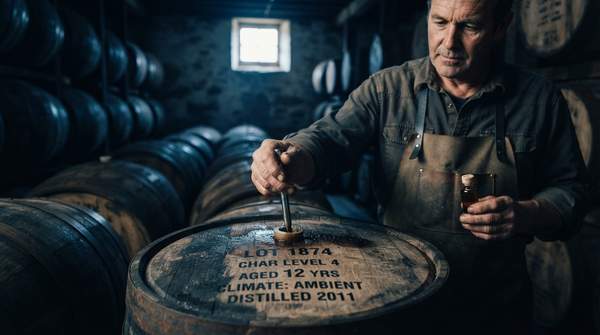
Oak aging changes a spirit through three intertwined processes: the barrel subtracts unwanted compounds, adds new ones drawn from the wood, and lets oxygen slowly transform the liquid. When I taste a smoky bourbon beside a honeyed, dried-fruit whisky, I am really tasting three decisions the producer made—how fiercely the barrel was charred, whether the wood was new or previously used, and where the cask spent its years. Understanding those levers turns a bottle's label from marketing copy into a reliable preview of what's in the glass.
The Alchemy of Oak: Transforming Spirits
Oak is the wood of choice for maturation because of its natural chemistry. As the Wine & Spirit Education Trust explains, compounds like vanillin (the source of vanilla notes), lactones (which add coconut and creamy flavors), and tannins (imparting spice and texture) are gradually extracted into the spirit, enhancing not just flavor but mouthfeel. Toasting or charring the barrel caramelizes the wood's natural sugars, layering in sweetness and complexity. The barrel is not a passive container, either: because oak is porous, a cask can be liquid-tight while still admitting oxygen through its staves. Every element—the oak itself, the fire applied to it, the barrel's past life, and the warehouse's climate—shapes the final character, whether the result is a smoky whisky, a rich rum, or a smooth cognac.
Three Core Processes: Subtraction, Addition, and Oxidation
Inside the barrel, three things happen at once. First, subtraction: the charred interior acts as a charcoal filter. In whiskey, as Thijs Klaverstijn notes at Distiller, this filter mainly removes sulphides, compounds that can cause an unpleasant metallic or gunpowder-like taste; some unwanted elements also leave through evaporation. Second, addition: the spirit draws vanillin, lactones, and tannins out of the wood, along with the caramelized sugars created by toasting. Third, oxidation: because barrels are not airtight, small amounts of oxygen enter and interact with the spirit, softening harsh alcohol notes into a smoother liquid and triggering reactions that create new flavor compounds—among them the nutty and dried-fruit aromas prized in premium spirits. The more complex the spirit was before maturation, the more material oxidation has to work with, building fruity, spicy, and even minty notes over time.
Char Level: Fire's Imprint on Flavor
The degree of charring—what distillers call the char level—runs from light to heavy, and it is one of the most direct flavor dials a producer can turn. WhistlePig's account of whiskey aging describes the charred layer as a filter that pulls out harsh elements while releasing vanilla, caramel, and smoky flavors as the whiskey interacts with it. A heavy char releases more intense, rich flavors; a lighter char brings out softer, more subtle notes. Charring does more than flavor the spirit: it deepens the color toward that familiar amber hue and smooths the liquid, making it less sharp and more refined. Charring the barrel's interior also intensifies pigment extraction, which is why heavily charred casks tend to give darker spirits faster.
Barrel History: New Wood vs. Finishing Casks
A barrel's résumé matters as much as its construction. New barrels impart the most flavor, contributing strong vanilla, spice, and tannic notes—a strong initial contribution that certain spirit categories, bourbon among them, are built around. Reused barrels offer subtler influences, letting the spirit's inherent qualities shine through rather than being dominated by wood. Then there are finishing casks: barrels that previously held sherry, port, or other wines can introduce secondary flavors such as dried fruit, nuts, or sweet spices, adding layers of complexity that fresh oak cannot replicate. The specific flavors depend heavily on what the cask held before and how long the spirit rests in it, which is why a "finished in ex-sherry casks" note on a label signals something quite different from "aged in new oak."
Climate's Crucial Role in Maturation
Where a spirit ages can matter as much as how long. Warmer climates, such as Kentucky, accelerate the interaction between spirit and wood, producing bold, robust flavors in a shorter time; cooler climates, like Scotland, allow slower maturation and subtler, more nuanced characteristics. Writing on rum maturation, Kate Bolland at Ethimex gives a vivid measure of the gap: heat paired with cooler nights draws out color and wood-derived compounds so much faster that a rum aged just three to five years in the tropics can develop depth comparable to eight to twelve years of temperate aging.
Ian Thomas, distillery director at Virginia Distillery Co., makes the same point for whisky, noting that a three-year-old spirit aged somewhere warm with big temperature swings will show more development of fatty acids, tannins, and vanillins than its cool-climate twin. Warm-climate aging carries a risk, though: faster wood interaction and increased oxidation demand careful balance, or the spirit can be over-oaked. Some distilleries in cooler regions now use temperature control to regulate the spirit's interaction with the wood.
Key Variables in Oak Aging and Their Flavor Impact
The table below maps each production choice to the mechanism it drives and the character you should expect in the glass. Use it to translate a label's aging description into a prediction before you pour.
| Aging Variable | Mechanism / Process | Resulting Flavors / Characteristics |
|---|---|---|
| Light charring / toasting | Addition of wood compounds; caramelization of the wood's natural sugars | Vanilla, caramel, and spice notes; softer, more subtle character |
| Heavy charring | Intense wood-compound extraction; charred layer filters harsh elements | More intense, rich, smoky, and charred notes; deeper amber color; smoother, less sharp spirit |
| New oak barrels | High extraction of wood compounds | Strong vanilla, spice, and tannic notes; pronounced oak influence, as in bourbon |
| Used / finished barrels | Subtler extraction; influence from previous contents | Secondary flavors from the prior fill—dried fruit, nuts, sweet spices from sherry or port casks—allowing the spirit's own character to shine |
| Warm climate aging | Faster spirit-wood interaction and oxidation; temperature swings push spirit deeper into the wood | Robust, bold flavors in less time; tropical rum can reach in 3–5 years what temperate aging takes 8–12 years to achieve; risk of over-oaking if unmanaged |
| Cool climate aging | Slower, gradual interaction and oxidation | Subtler, more nuanced character; longer durations typically needed to reach full complexity |
These are typical outcomes rather than guarantees—the exact concentration and interplay of compounds vary with other choices in distillation and aging, and the intensity of smoky notes depends on both char level and wood type.
Decoding the Bottle: Anticipating Flavor Profiles
Put the framework to work and labels start speaking plainly. "Heavily charred new American oak" predicts intensity: bold vanilla and caramel, a smoky edge, deep color, and the tannic grip of fresh wood. "Finished in ex-sherry casks" predicts a different glass entirely—dried fruit, nuts, and sweet spice layered over a subtler oak backbone. A rum labeled tropically aged at five years should read as mature as a decade-old temperate counterpart, while a cool-climate Scotch of the same age will lean delicate and nuanced. The three processes never operate in isolation; a single spirit is the sum of what the char subtracted, what the wood added, and what oxygen slowly built.
Anticipating Flavor: Your Guide to Aged Spirits
When selecting a luxury spirit, consider the stated aging variables—char level, barrel type, and origin climate—to anticipate its flavor profile. The reader will be able to confidently interpret product descriptions like "heavily charred American oak" or "finished in ex-sherry casks" and predict the dominant flavor notes (e.g., smoky, vanilla, dried fruit) before tasting. That prediction is testable: buy or sample a bottle whose label states its aging variables, name the notes you expect from the table above, and check them against what you actually taste.
Sources
- The alchemy of oak: barrel ageing in spirits — Wsetglobal
- Aging Spirits: The Magic of Oak — Distiller - The Liquor Expert
- The Barrel Effect: How Aging Transforms Whiskey — Whistlepigwhiskey
- How Climate Affects Barrel Maturation — Rocky Mountain Barrel Company
- Whisky Aging in Hot vs. Cold Climates — The Really Good Whisky Company
- How Climate Affects Rum Ageing — Ethimex
- Hot August Nights: Warm Climate Maturation — The Scotch Malt Whisky Society