Sustainable luxury yacht design now rests on two concrete technologies rather than vague good intentions: hybrid propulsion systems that pair diesel engines with electric motors, and interior materials such as recycled PET foam that can cut interior structural weight by up to 60% compared to traditional plywood. The first delivers quieter cruising and lower fuel burn; the second turns a lightweighting gain into a direct fuel-efficiency benefit. The catch, as industry commentary consistently notes, is higher initial cost and the difficulty of sourcing eco-friendly materials that still meet luxury durability standards.
The Evolution of Sustainable Luxury Yacht Design
Environmental responsibility has moved from a niche concern to a defining consideration in yacht design. Builders such as Sanlorenzo frame the shift around owner value rather than sacrifice: in the builder's own account of modern luxury yachting, sustainability is compelling precisely because it offers tangible benefits "not just to the environment, but to the owner's overall experience and investment." Design houses echo that framing.
Writing for Opalinski Design, the design house's commentary emphasizes longevity and adaptability — modular designs that allow easier upgrades and repairs, extending a vessel's working life and reducing waste. That ethos of durability, rather than disposability, is what allows sustainability and luxury to speak the same language: both cultures prize things built to last.
Advanced Propulsion: The Rise of Hybrid Systems
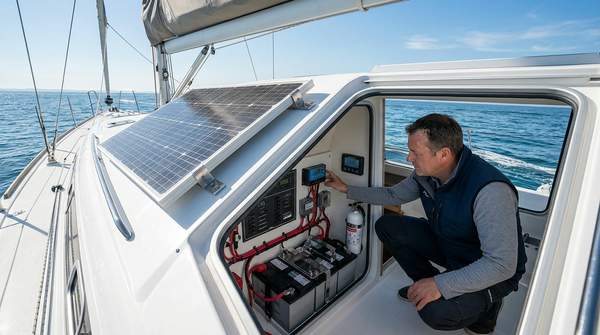
Hybrid propulsion is, by most accounts, the single most significant advance in sustainable yachting. The principle is straightforward: the yacht carries conventional diesel engines alongside electric motors, and the crew chooses which power source — or which blend — suits the moment. At low speeds, in harbors, marinas and protected anchorages, the yacht can run on battery power alone, cutting fuel use and exhaust output precisely where emissions are most visible and most intrusive.
The operational payoff goes beyond compliance. Because electric running is quiet, hybrid vessels deliver what designers call silent cruising — an onboard experience free of constant engine rumble, and a lighter footprint on the marine environment. Sanlorenzo notes that hybrid systems significantly lower fuel consumption during low-speed cruising and maneuvering, delivering what the builder describes as "practical savings and long-term value." The trade-off is well understood across the industry: hybrid systems add complexity and carry a higher initial cost than a comparable conventional drivetrain.
Comparative Overview of Sustainable Yacht Technologies
To weigh these options on a consistent footing, the table below compares the two best-documented sustainable technologies against the same criteria: how they work, what the owner gains, and what it costs in money or compromise.
| Technology | Principle of Operation | Key Owner Benefits | Primary Trade-offs |
|---|---|---|---|
| Hybrid propulsion systems | Diesel engines combined with electric motors, allowing electric-only, diesel-only or blended operation; battery power covers low-speed running | Reduced fuel consumption and emissions, especially at low speed and in port; quieter, more comfortable cruising with flexibility in power management | Higher initial cost and added system complexity versus conventional propulsion |
| Recycled PET foam interiors | Structural interior foam made from recycled plastic bottles; developed in-house and applied to composite structures and interior fit-out | Up to 60% weight reduction versus plywood, which reduces fuel consumption and enhances vessel performance; significantly lower noise levels; fully recyclable, with no need for non-recyclable adhesives | Finding eco-friendly materials that meet luxury durability standards; balancing aesthetics with functionality; higher initial cost of sustainable materials |
The comparison reveals a useful symmetry. Both technologies monetize efficiency: hybrid trims fuel burned per voyage, while PET foam trims the weight the vessel must carry on every voyage. Both also trade a higher upfront price for long-term operational and experiential gains — the exact calculus an owner must run when commissioning a new build.
Innovative Materials: Redefining Yacht Interiors with Recycled PET Foam
The most vivid example of sustainable materials engineering comes from Sunreef Yachts, whose research and development team has been integrating recycled PET bottles into production — first for the composite structures of the yachts and now for their interiors. The scale is striking: up to 150,000 recycled PET bottles go into the interior of a single Sunreef 80, transforming post-consumer waste into high-performance structural material.
The number that matters to an owner is weight. According to Sunreef, PET foam in interior design achieves a 60% weight reduction compared with traditional plywood solutions — a saving the shipyard is working to extend, with a stated vision of replacing up to 60% of the total interior structure. Crucially, the material is no eco-aesthetic compromise: Sunreef reports that it integrates seamlessly with all traditional yacht finishes, including wood, paint and laminate, so the hand-fitted walnut and lacquered surfaces of a luxury interior remain entirely available. The foam also eliminates the need for non-recyclable adhesives, making the assembly itself recyclable.
Beyond Green: Performance and Comfort Advantages
What makes these technologies persuasive to owners is that the sustainability argument and the performance argument converge. Weight reduction is the clearest case: a lighter yacht requires less energy to move through the water, so Sunreef connects its PET-foam interiors directly to reduced fuel consumption and an enhanced overall performance profile. An owner who never reads an environmental brochure still benefits from that physics every time the engines run.
Comfort follows the same pattern. Sunreef reports that PET foam significantly reduces noise levels aboard, delivering "a quieter and more serene yachting experience." Hybrid propulsion adds silent cruising at anchor and in port. In both cases the greener choice is also the more pleasant one — an alignment that explains why builders lead with experience, not only ethics, when describing these systems.
Navigating the Trade-offs: Cost and Material Considerations
Honesty about trade-offs is where a serious evaluation begins. Industry commentary identifies four recurring challenges in sustainable yacht design. Material limitations top the list: sourcing eco-friendly materials that genuinely meet durability standards is difficult, and not every green material can survive the marine environment. Second is the balancing act between aesthetics and functionality — a yacht must remain visually exceptional while serving practical purposes.
Third is cost. Sustainable materials and technologies "often come at a higher initial cost," a point raised across builder and industry commentary alike, though no source in this evidence set attaches specific price figures or payback periods to hybrid systems or PET interiors. Fourth is regulatory complexity: navigating environmental rules adds work to any redesign. None of these is a reason to abandon sustainability, but all four belong in the specification conversation from day one.
Embracing Sustainable Luxury: A Path to Informed Yacht Ownership
Prospective yacht owners should evaluate sustainable technologies like hybrid propulsion and recycled interior materials based on their specific priorities — environmental impact, operational fuel savings, enhanced onboard comfort — against their willingness to manage higher initial investment and the material-sourcing considerations described above. The evidence is clearest on two options: hybrid propulsion for its fuel and noise benefits, and recycled PET foam for its documented 60% weight advantage and finish compatibility.
The practical test of a serious sustainable specification is concrete: a new build or refit specification that includes at least one advanced sustainable propulsion system, or a significant percentage of sustainable interior materials. An owner who can point to that line in the specification — and to the fuel-consumption and noise improvements it is designed to deliver — has made sustainability a measurable engineering decision rather than a marketing label.
Sources
- Yachts in 2025: Luxury Design Aligns with Sustainability — Expedición en barco pequeño Kontiki - Sobre el mar
- Sustainability & innovation in luxury yachting — Sanlorenzo Yachts UK
- The Future of Eco-Friendly Design Approaches in Luxury Yachting — Opalinski Design
- From Recycled Plastic to Luxury: Sustainable Yacht Interiors — Sunreef Yachts