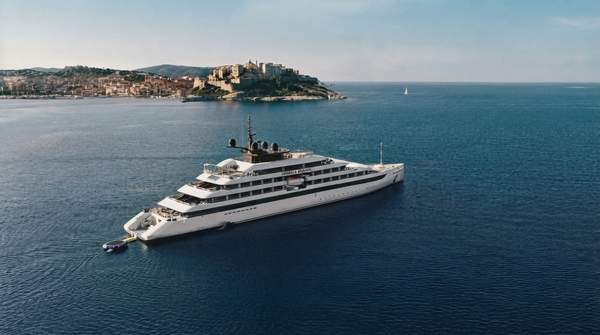
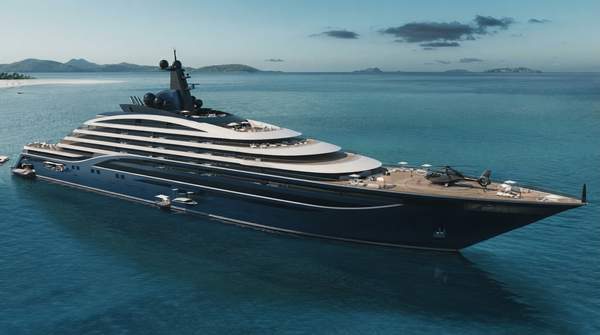
The 70-meter sailing superyacht SY Zero, a vessel designed for entirely fossil-fuel-free operation, is now nearing its final construction stages, promising a transformative benchmark for luxury at sea. This ambitious project, a clear demonstration of forward-thinking design, relies on an immense five-megawatt-hour battery storage system to power its purely electric energy needs. Its systems showcase advanced sustainable propulsion and design for luxury superyachts, with a delivery expected in 2026, challenging traditional notions of maritime opulence.
For decades, superyachts have stood as potent symbols of excess and high emissions, their powerful engines consuming vast quantities of fossil fuels. Yet, a palpable shift is underway. Pioneering designs and innovative propulsion systems are now proving that true opulence can indeed coexist with zero-fossil-fuel operation, dissolving the long-held tension between luxury and environmental responsibility.
Based on the rapid development and implementation of advanced hybrid and electric systems, the future of luxury superyachts appears to be increasingly fossil-fuel-free, setting a significant new standard for maritime sustainability across the affluent world.
The New Horizon: Luxury Yachts Embrace Green Innovation
Beyond the groundbreaking SY Zero, other influential players are demonstrating a deep, unwavering commitment to environmental stewardship. Vitruvius Yachts, for instance, articulates a clear vision: to create efficient and balanced vessels that inherently consume less fuel, thereby significantly reducing their carbon footprint, according to Vitruviusyachts. This philosophy embodies a comprehensive approach, integrating sustainable principles from the initial material selection right through to the vessel's overall operational efficiency.
Every single project undertaken by Vitruvius Yachts will now incorporate renewable energy-related elements, a clear signal of their dedication. The Vitruvius Yachts 52, a particularly notable example, is slated for construction entirely of aluminum. This deliberate material choice reflects a broader, crucial industry trend towards lighter, more recyclable components. Such materials contribute directly to the overarching sustainability goals of a vessel, ensuring a reduced impact throughout its entire lifecycle.

Under the Hood: Pioneering Propulsion and Energy Systems
The Sanlorenzo 50Steel superyacht, majestically launched in May 2024, represents another monumental stride in sustainable maritime technology. This sophisticated vessel is powered by an advanced system capable of generating up to 100kW of electrical power, as reported by Yachtcarbonoffset. Its innovative design proudly features a hybrid propulsion system, meticulously developed in collaboration with Siemens, and integrates a robust battery array for enhanced efficiency.
Central to the Sanlorenzo 50Steel's green credentials is the LIFE OCEAN project, which ingeniously replaces traditional diesel generators. Instead, it employs a methanol reformer combined with a high-temperature polymer electrolyte membrane (HTPEM) fuel cell system. This distinct approach diverges from SY Zero's purely electric, renewable energy focus, indicating a pragmatic, multi-path strategy for decarbonization within the industry. While certain yachts strive for absolute pure electric operation, the industry is also embracing advanced alternative fuels like methanol, acknowledging the diverse operational needs and range requirements of superyachts.
The reliance on diverse energy harvesting for SY Zero—encompassing hydro-generating thrusters, extensive solar arrays spanning 100 square meters, and a wind turbine—coupled with its massive five-megawatt-hour battery storage, vividly demonstrates that achieving true fossil-fuel-free opulence is an intricate engineering challenge centered on energy self-sufficiency. This intricate system suggests that the very definition of future luxury will be intricately tied to a vessel's independence from external fuel sources, fostering a new era of self-reliance at sea.
Charting the Course: Challenges in Sustainable Yachting
Developing genuinely sustainable superyachts demands far more than the mere selection of a propulsion system; it necessitates a comprehensive and rigorous assessment of all energy impacts. A detailed study, for instance, investigated the well-to-wake energy impacts of various alternative fuels, according to Sciencedirect. This intricate analysis meticulously considers the entire lifecycle of a fuel, from its initial production to its ultimate consumption aboard the vessel, revealing a complex web of environmental considerations.
Achieving true sustainability requires meticulous, comprehensive design and rigorous lifecycle analysis. This presents significant engineering and logistical hurdles, demanding deep expertise across multiple disciplines, from naval architecture to material science. Builders must conscientiously consider not only the immediate operational emissions but also the broader environmental footprint of materials chosen, the energy consumed during manufacturing processes, and even the eventual decommissioning of the yacht. Every decision carries weight in this pursuit of eco-luxury.
Beyond Propulsion: Integrated Approaches to Eco-Luxury
The pursuit of sustainable yachting extends far beyond the confines of the engine room and advanced power systems, permeating every single aspect of a vessel's design and ongoing operation. This broader perspective necessitates a truly all-encompassing approach to minimize environmental impact from bow to stern. Builders and discerning owners are increasingly focusing on the provenance and properties of materials, favoring those that are highly recyclable, sourced locally to reduce transportation emissions, or possess a lower embodied energy footprint.
Beyond the structural elements, daily operational practices play an equally significant role in achieving eco-luxury. This includes the implementation of highly efficient waste management systems, which minimize landfill contributions, alongside advanced water purification technologies that drastically reduce fresh water consumption. Careful consideration of onboard consumables, from provisions to cleaning supplies, also contributes to a vessel's overall ecological responsibility. The overarching aim is to craft vessels that leave the most minimal trace possible, both in their majestic wake across the oceans and through their intricate supply chains.
Your Questions Answered: The Future of Sustainable Superyachts
What is the timeline for new sustainable superyachts?
SY Zero, a 70-meter sailing superyacht designed for fossil-fuel-free operation, is expected to be delivered in 2026, according to Yachtharbour. This imminent delivery, alongside the Sanlorenzo 50Steel's impressive launch in May 2024, vividly indicates that these groundbreaking technologies are transitioning rapidly from conceptual designs to commercial reality at an accelerated pace.
How can superyachts reduce their environmental impact?
Beyond revolutionary propulsion systems, superyachts can significantly reduce their environmental impact through rigorous lifecycle assessments of all materials, optimizing hull designs for superior hydrodynamics, and implementing highly efficient waste and water management systems. These comprehensive approaches ensure a minimal footprint, meticulously considered from the vessel's initial construction through its entire operational lifespan.
What are the most sustainable materials for yacht construction?
While the Vitruvius Yachts 52 notably utilizes aluminum for its exceptional lightweight and recyclable properties, other sustainable materials are emerging. These include advanced composite structures incorporating bio-resins or recycled content. Additionally, responsibly sourced timbers and innovative insulation materials are increasingly employed, all contributing to reducing a yacht's overall environmental footprint and enhancing its eco-credentials.
Beyond the Horizon: The Enduring Impact of Sustainable Yachting
The profound innovation witnessed in pioneering projects like SY Zero and the Sanlorenzo 50Steel indicates far more than a fleeting trend within the luxury yachting sector. It represents a core and enduring shift in core industry values, where environmental responsibility is rapidly becoming not just an option, but an inherent component of true luxury. This ongoing, passionate development firmly positions the superyacht industry as a surprising yet significant leader in the realm of advanced maritime environmental solutions.
Based on the imminent delivery of SY Zero in 2026 and the successful May 2024 launch of Sanlorenzo's 50Steel, the superyacht industry is clearly not merely experimenting with sustainability; it is rapidly establishing zero-fossil-fuel operation as the undeniable new benchmark for opulence. This transformative trajectory effectively forces traditional builders to either embrace innovation and adapt or risk becoming obsolete in a rapidly evolving market that increasingly prioritizes both unparalleled luxury and impeccable environmental performance.