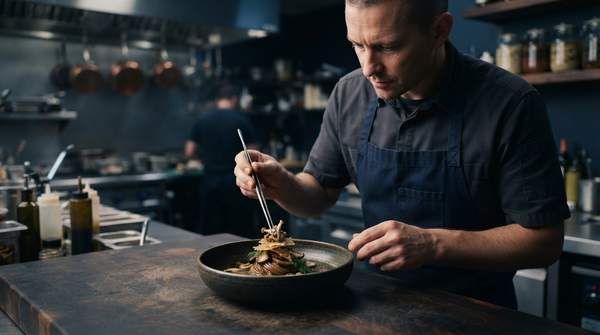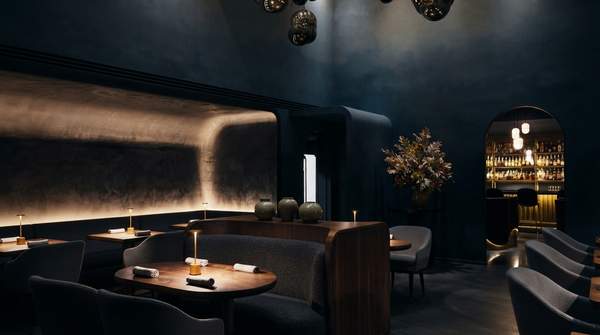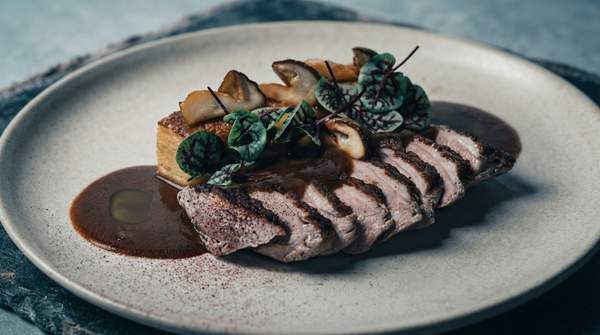
The most memorable dish I ever ate didn't just taste good—it arrived, it popped, it surprised me. That, it turns out, is the point. Neurogastronomy is the study of how all our senses—sight, smell, touch, hearing and taste—combine to shape how we experience food, and chefs working in this tradition, like Jozef Youssef of the experimental dining collective Kitchen Theory, treat flavor as something designed rather than simply cooked. The brain integrates signals from temperature, texture and the timing of aroma release into a single impression that a skilled kitchen can deliberately steer. Here is the working framework behind that manipulation.
Manipulating Touch: Texture and Mouthfeel
Texture is where fine dining kitchens do their most deliberate work. As the team at Kaviar Restaurants explains in their guide to flavor in gourmet dishes, chefs manipulate texture through techniques like sous-vide, foams and controlled searing to build multi-layered sensory experiences—and, in their words, "texture and flavor together define the pleasure of a fine dish." That's a strong claim, but not an unusual one: the same source notes that temperature, texture and the timing of aroma release all shift perceived intensity.
The mechanism is worth pausing on. Texture doesn't just accompany flavor; it changes how flavor is perceived. Slow, sustained release of aromas deepens lingering umami, while abrupt releases create bright aromatic contrast—a timing decision as much as a tactile one. When a gel melts slowly on the tongue versus a liquid bursting all at once, the diner receives two genuinely different flavor experiences from identical ingredients.
Consider the practical expression. Sous-vide cooking keeps proteins at a precise temperature so their texture is uniform from edge to edge—no gradient of doneness. Controlled searing, by contrast, is deployed for its Maillard-derived roasted notes, layering a crisped surface over a tender interior. Foams add something else entirely: a delicate, airy texture that carries aroma without weighing the plate down. Each technique is chosen for what it does to the diner's mouth, not just to the ingredient.
Visual Presentation: Eating with Your Eyes
Diners eat with their eyes first, and chefs know it. The multisensory research tradition that Youssef works in—his background includes stints at The Connaught, The Dorchester and The Fat Duck—treats visual presentation as a genuine input into flavor perception, not decoration applied afterward.
Le Cordon Bleu's culinary institute frames the same shift from the kitchen's side: their educators describe a move away from a singular focus on the signature dish toward an experience that "encapsulates and socialises the process that created it," with a chef offering a multisensory approach through a creative process that tells a story. Color, plating and composition are part of that storytelling.
The details extend further than the food itself. Writing for Escoffier's culinary school blog, the school notes that heavier cutlery has been associated with higher perceived quality, and that the size of a plate or bowl can influence how much a diner consumes. The implication is quietly radical: perception of quantity and quality is shaped not just by the food but by how it is presented—the plateware, the weight of the fork in your hand. For chefs, these choices "extend beyond aesthetics," in Escoffier's phrasing; they help guide expectation, influence perception, and shape how a dish is ultimately experienced.
So when a tasting menu course arrives as a single quenelle on a vast white expanse, that emptiness is doing something. It signals restraint, precision, luxury—before you've tasted a thing. That's neurogastronomy operating through your eyes.
Modernist Techniques in Action: Spherification and Foams
Two techniques make the abstract concrete. Spherification encloses a liquid inside a thin gel membrane, producing a sphere that holds its shape until bitten—then bursts. The food-technology firm Spherika, whose team writes about the technique's relationship to neurogastronomy, describes balsamic vinegar spheres adding "a burst of acidity" to salads, passion fruit spheres bringing "an explosion of flavor and freshness" to desserts, and yuzu spheres enhancing perceived freshness and complexity alongside seafood.
What makes spherification a genuine neurogastronomy case study is that it hits multiple senses at once. Spherika's writers note that the spheres' unexpected texture, combined with their visual presentation and the popping sound they make, can enhance taste perception and create a memorable culinary experience. Touch, sight and sound arrive in a single bite—and the burst itself is an abrupt flavor release, exactly the kind that Kaviar's guide describes as creating bright aromatic contrast.
Foams work the opposite direction. Rather than concentrating flavor into a moment of impact, they disperse it into a light, ephemeral texture. Whipped from a flavorful liquid using stabilizers, a foam delivers aroma almost immediately—it's mostly air and volatile compounds—while adding what the same sources describe as delicate texture. A carrot foam tastes unmistakably of carrot, but with none of the density of carrot; the diner perceives the flavor without the expected weight, which reads as refinement and lightness.
Together the two techniques bracket a range: spherification compresses flavor into surprise, foams stretch it into airiness. Both, notably, are also visual—the glossy sphere, the pale cloud—reminding us that modernist technique rarely manipulates one sense in isolation.
The Multi-Sensory Flavor Framework
Pulling these threads together, here is a working model for reading any fine dining plate—four sensory channels, what the chef is trying to achieve through each, the techniques deployed, and the effect on your perception. Use it the next time a course arrives and you want to see the design decisions underneath it.
| Sensory Channel | Chef's Goal | Specific Technique | Effect on Flavor Perception |
|---|---|---|---|
| Touch (Texture & Mouthfeel) | Create unique tactile sensations that enhance or alter perceived flavor | Spherification, foams, sous-vide, controlled searing | Multi-layered mouthfeel; abrupt bursts create bright aromatic contrast, slow release deepens lingering umami |
| Temperature | Control volatility of aromatics and mouthfeel | Chilling (e.g., caviar), warm searing | Warmer temperatures promote aroma release and highlight roasted notes; cooler ones preserve delicate volatiles and fresh, briny qualities |
| Sight (Presentation) | Shape diner expectations and perceived quality before the first bite | Plating, color choices, plate and portion size, cutlery weight | Visual cues guide expectation; heavier cutlery has been associated with higher perceived quality, plate size with consumption |
| Smell (Aroma) | Intensify and direct the aromatic experience, a key component of flavor | Foams; temperature-driven aroma release | Airy textures deliver aroma immediately and intensify it; timing of release changes perceived intensity |
The framework's real lesson is that these channels interact. A chilled sphere hits touch and temperature at once; a warm foam hits smell and sight. Chefs aren't tuning four separate dials—they're composing with them together.
Beyond the Plate: Menu Language and Expectation
Neurogastronomy's reach extends past the food to everything surrounding it. The most vivid example is Dominique Crenn, whose poetic, narrative-driven menus—rendered in verse rather than conventional dish descriptions—prepare the diner emotionally before a single course arrives. Menu language is itself a sensory input: it sets expectations, primes interpretation, and changes how the food will taste. The Le Cordon Bleu educators' description of dining as a story that socializes its own creation is the institutional echo of the same idea.
This is why I'd argue the tasting menu is neurogastronomy's native format. It's not just a sequence of dishes; it's a managed sequence of expectations, surprises, textures and temperatures, with language and presentation priming each course before it reaches the table.
Crafting Memorable Experiences: The Chef's Neurogastronomy Toolkit
So what should you take from all this? Chefs can intentionally design dining experiences that transcend basic taste by systematically manipulating sensory inputs and environmental cues. That's not marketing fluff—it's the explicit working method of the kitchens and educators described here, from Youssef's sensory-focused dining projects to the precision-temperature logic of sous-vide.
The measurable indicator is equally concrete: diners report a heightened and more complex perception of flavor, often describing dishes as "memorable" or "surprising" because of multi-sensory engagement—Spherika's account of spheres that combine unexpected texture, visual presentation and a popping sound to enhance taste perception is a representative example. Next time you're at a fine dining table, run the framework. Ask what the temperature of the sauce is doing to its aroma, what the plate's emptiness is signaling, what the foam's lightness changes about the flavor underneath. If a course genuinely surprises you—if it feels engineered rather than merely cooked—you've just watched the framework work.
Sources
- Science of Food Plating — Great British Chefs
- The Science of Taste: How Flavors Work in Gourmet Dishes – Kaviar Restaurants — Kaviarrestaurants
- How science is changing the dining experience — Cordonbleu
- Neurogastronomy: How Understanding the Science of Taste Is Changing Restaurant Menus — Escoffier
- Spherifications and Neurogastronomy: How They Impact Taste Perception — Spherika