Biophilic design strengthens the human connection to nature within built spaces, and in luxury homes it does double duty: it deepens well-being while heightening aesthetic appeal. The core idea is simple. Rather than decorating with a few plants, a biophilic residence weaves daylight, natural materials, organic forms, and indoor-outdoor flow into its very structure. Design professionals working in this space describe the result as environments that feel calming, restorative, and inherently human. This guide explains the principles behind that effect and provides a checklist for evaluating how well a home—or a set of architectural plans—achieves it.
What is Biophilic Design in Luxury Homes?
Biophilic design is the practice of integrating natural elements and nature's patterns into architecture so that a space supports the people who inhabit it subconsciously as much as visually. Writing for the design firm RealCraft, Amber Nelson describes how this works on the mind: it "works on your subconscious mind to make your home feel more comfortable—without you always being consciously aware of it." She frames the payoff in distinctly luxurious terms, writing that a biophilic space "makes you feel protected and calm—which is the ultimate luxury."
In residential settings, these strategies are structural rather than superficial. As Moss Architecture, a Chicago firm that applies biophilic thinking to residential projects, explains, biophilic strategies are "integrated into the structure and planning of a home." That means the decisions that matter most—window placement, material palettes, circulation paths, and the relationship between interior and garden—happen at the architectural level, not the decorating stage.
Importantly, biophilic design is not a single style. Nelson notes that its principles are adaptable enough to work "with any design style, from minimalist to traditional." The unifying thread is a stronger human-nature connection, achieved through the elements explored below.
Key Principles: Integrating Nature's Elements
Four clusters of design decisions carry most of the biophilic weight in a luxury residence.
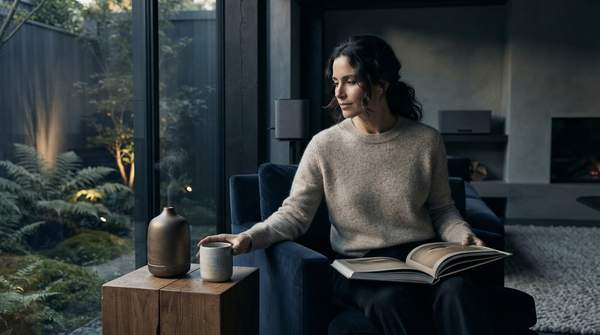
Light and views. Large windows that frame outdoor views, generous daylight access, and layouts that promote airflow and natural light are the most common residential manifestations, according to Moss Architecture. Natalia Neverko Design, a Miami-based luxury interior design practice, similarly emphasizes natural light, plants, water, and views as the ingredients of restorative, sophisticated interiors.
Natural materials. A key feature of luxury decor, as RealCraft points out, is the use of "the most beautiful and longest-lasting materials available"—and many of them, including stone, solid wood, and marble, happen to be natural. This makes material selection a natural meeting point between luxury and biophilic principles.
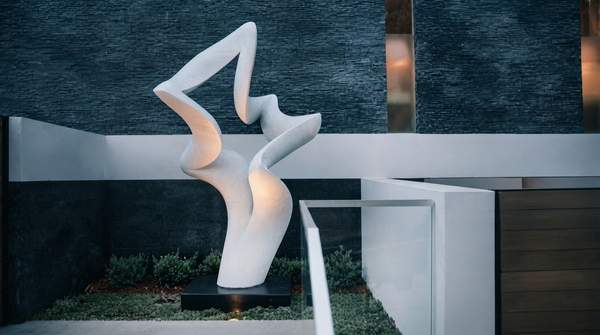
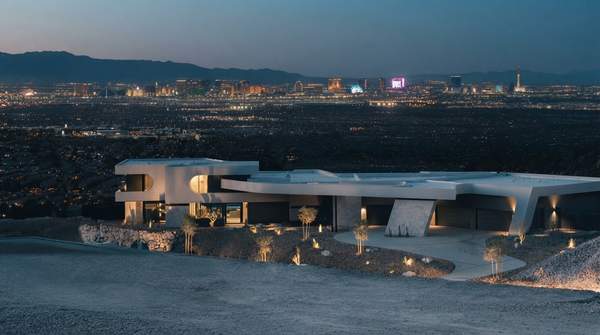
Organic forms and spatial experience. Moss Architecture describes sculpting forms that echo natural geometries, designing circulation paths that unfold gradually, and creating moments of refuge and prospect within a home—choices that make spaces feel intuitive and emotionally resonant. Neverko's studio adds organic shapes and the architectural relationship between indoors and out to this toolkit.
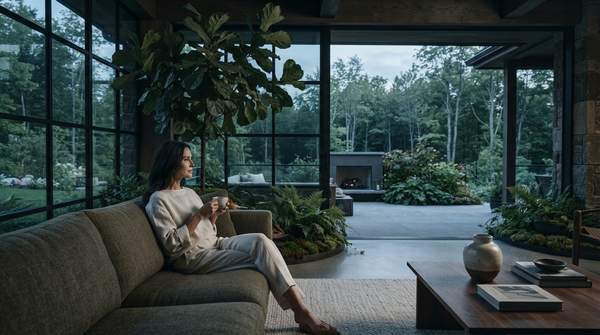
Indoor-outdoor flow. Seamless transitions between interior and exterior spaces—achieved through large openings, consistent material palettes, and integrated landscaping—extend the home into its natural setting and pull the setting back inside.
The Benefits of a Biophilic Home
The case for biophilic design rests on well-being as much as beauty. Summarizing a 2021 review by Zhong, Schröder, and Bekkering, the architecture firm Shepley Bulfinch notes that biophilic elements such as natural lighting, greenery, and organic textures "have been shown to reduce stress, enhance cognitive function, accelerate healing, and promote overall well-being and environmental sustainability within the built environment." One caveat worth preserving: much of the underlying research was conducted in workplaces and other built environments, though designers report the same dynamics in residential settings.
Sculptform, a materials manufacturer writing on biophilic principles, reports that spaces incorporating biophilic architecture are linked to decreased stress, enhanced productivity, and faster recovery from illness—and that the principles apply to homes as readily as to offices, schools, or hospitals. In a residential context, Moss Architecture translates this into everyday experience: homes designed this way "encourage slower movement, deeper relaxation, and stronger connections between family members and their surroundings."
Biophilic design also complements sustainability goals. Natalia Neverko Design points to energy-efficient layouts, natural ventilation, and thoughtful use of daylight as supports for environmentally responsible interiors, and notes that biophilic principles can be considered alongside frameworks like LEED and the WELL Building Standard. Moss Architecture makes the same connection, describing how biophilic strategies combined with sustainable architecture create residential spaces that feel healthier to live in while supporting sustainable design goals. This article is not, however, a guide to achieving any certification—only to the underlying design choices.
Biophilic Design Evaluation Checklist for Your Luxury Home
Use this diagnostic framework to assess how well a design integrates biophilic elements. For each principle, ask the question and look for the implementation examples; a design that satisfies the question in the structural sense—rather than as an afterthought—earns a check.
| Principle | Evaluation question | Examples of successful implementation |
|---|---|---|
| Visual connection with nature | Do major living spaces offer framed views of greenery, water, or landscape through large windows? | Generously sized windows framing outdoor views; sightlines to gardens or water from principal rooms |
| Dynamic and diffuse light | Does natural light vary through the day and reach deep into the plan? | Layouts that promote natural light and airflow; daylighting that also reduces energy use |
| Presence of natural materials | Are wood, stone, or marble used as primary finishes rather than accents? | Wood or stone finishes; solid wood, stone, and marble surfaces chosen for beauty and durability |
| Biomorphic forms and patterns | Do shapes, textures, and circulation echo natural geometries? | Organic shapes and layouts; forms that echo natural geometries; paths that unfold gradually |
| Indoor-outdoor flow | Is the transition between interior and exterior seamless? | Large openings, consistent material palettes indoors and out, integrated landscaping |
| Multi-sensory nature | Does the home engage senses beyond the visual? | Water features, plants, living walls, and natural ventilation that bring outdoor sensations indoors |
| Well-being outcome | Does the plan seem designed to feel calming and restorative? | Moments of refuge and prospect; spaces that encourage slower movement and relaxation |
Interpret the results by category. A home strong in materials but weak in light and views can likely be improved with glazing and layout changes; a home strong in light but weak in flow may need better physical connections to the garden. The checklist works equally well on architectural drawings for a new build and on an existing residence, and it gives homeowners specific, evidence-based language for conversations with their architect about strengths and gaps.
This article covers principles for luxury residential architecture rather than commercial or public spaces, and it does not address cost estimates for specific elements.
Embracing Nature for Elevated Living
Luxury homeowners should actively integrate biophilic design principles into their residential projects to enhance well-being, aesthetic appeal, and sustainability. The consistent thread across designers and researchers is that daylight, natural materials, organic forms, and indoor-outdoor connection work together to produce spaces that reduce stress and feel restorative. The measure of success is concrete: a design plan that demonstrably incorporates natural light, materials, and indoor-outdoor connections, as evidenced by architectural drawings and material specifications. When those documents show nature woven into the structure itself rather than added on, the home is positioned to deliver the calm, protection, and restorative quality that define luxury at its most livable.
Sources
- Biophilic Luxury Design Guide — RealCraft
- Biophilic Design Principles & Examples — Sculptform
- How Biophilic Design Can Influence Architectural Design — Moss Architecture
- 10 Expert Tips for Biophilic Interior Design in Luxury Homes — Natalia Neverko Design
- Six Principles of Biophilic Design - Biophilic Design Elements — Shepley Bulfinch