Getting an unwanted animal out of a house is a relief. But if the opening that allowed it inside remains untouched, the relief may not last.
That is why wildlife exclusion deserves as much attention as removal itself.
A raccoon, squirrel, bat, bird or rodent does not necessarily need a dramatic hole in the roof to gain access to a residential property. Small vulnerabilities around the roofline, soffits, fascia, vents, foundations and other structural areas can create opportunities for wildlife to enter.
For Houston homeowners, professional wildlife control can therefore involve two connected goals: removing the current intruder and making the property less accessible to future ones.
Ninja Wildlife Control builds its service around that distinction, combining humane wildlife removal with exclusion, restoration and property fortification.
Why Removing the Animal Is Not Enough
Imagine finding a squirrel in the attic and successfully getting it out.
The immediate problem appears solved. But if the squirrel entered through a damaged section of soffit or another opening that remains accessible, the property has not really changed.
The same opening is still there.
Wildlife control becomes more effective when the underlying access problem is addressed. This is why exclusion is such an important part of a complete wildlife-management strategy.
Instead of concentrating solely on the animal, exclusion shifts attention to the structure itself.
Where can wildlife enter?
Which areas have been damaged?
Are there gaps or openings that should be sealed?
Could another animal use the same route?
These questions help move a homeowner from temporary relief toward longer-term protection.
What a Professional Inspection Looks For
A proper exclusion strategy begins with understanding the property.
Ninja Wildlife Control's inspection process involves a perimeter analysis of the home's exterior envelope, including the roofline, foundation, soffit and fascia. Potential entry points are documented and photographed.
This type of inspection is important because wildlife can be surprisingly difficult to track.
The location where an animal is seen is not necessarily the location where it entered. A squirrel heard in an attic may have entered somewhere along the roofline. An animal found near a wall may have accessed a concealed opening elsewhere.
Looking at the whole property helps create a more accurate picture.
It also helps identify vulnerabilities that a homeowner may not notice from ground level.
Different Wildlife Requires Different Approaches
There is no single exclusion technique that works identically for every species.
Ninja's species-specific protocols reflect that reality.
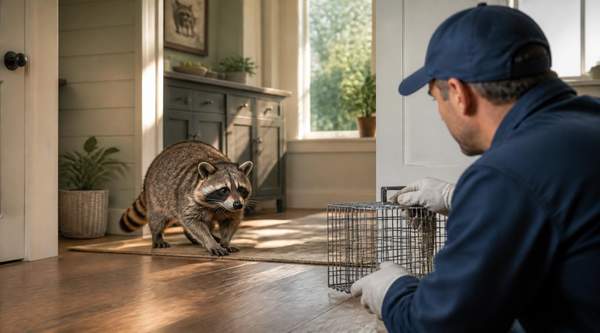
For raccoons, the company describes live trapping combined with one-way exclusion doors and sealing entry points with galvanized steel mesh. For grey squirrels, its approach includes exclusion trapping and reinforcement of chew points with steel plate. Brown bats are addressed through seasonal exclusion using one-way bat valves.
Rodent exclusion can involve sealing entry points larger than a quarter inch and eliminating harborage, while opossum management can involve live trapping and sealing decks or crawlspaces with heavy-gauge wire mesh.
The broader lesson for homeowners is simple: the animal matters.
A strategy appropriate for a squirrel should not automatically be assumed to be appropriate for a bat, raccoon or another species.
Humane Exclusion Can Keep the Process Focused on Prevention
Homeowners dealing with wildlife often want the problem resolved without unnecessary harm to the animal.
Ninja Wildlife Control states that its methods prioritise humane treatment and ecological responsibility. Its exclusion process uses species-specific devices, including one-way doors that allow animals to leave without re-entering.
This approach puts the focus on changing access rather than simply reacting to the animal's presence.
Once an animal can safely leave and the appropriate access points are addressed, the property can be prepared to resist another intrusion.
That is a fundamentally different objective from simply catching whatever happens to be inside.
What Happens When Wildlife Has Already Caused Damage?
Exclusion becomes even more important when an intrusion has already affected the structure.
Wildlife can disturb insulation, create openings, damage materials or contaminate areas. In some cases, the homeowner may not discover the extent of the problem until after the animal has been removed.
Ninja's restoration services are designed to address this next stage. The company describes insulation replacement, wiring inspection, structural repair and professional sanitisation as part of its restoration process.
The appropriate restoration work will depend on the individual property.
A minor intrusion and a long-standing infestation are not necessarily going to leave the same type or amount of damage.
That is another reason inspection matters before deciding what the property needs.
Fortifying the Property for the Future
Once wildlife has been removed and necessary restoration is complete, the final step is preventing another animal from simply finding a different route inside.
Ninja calls this phase “Fortify.”
Its stated process involves sealing potential entry points with contractor-grade materials, including galvanized steel, heavy-gauge mesh and commercial-grade sealant.
The purpose is straightforward: address the vulnerabilities identified during the inspection rather than waiting for another animal to expose them.
For homeowners, this can mean fewer surprises and a better understanding of how their property is being protected.
Signs Your Home May Need Wildlife Exclusion
You may want to have your property assessed if you have noticed:
- Repeated wildlife activity around the roofline
- Animals entering or leaving an attic
- Damaged soffits or fascia
- Openings around vents or other exterior features
- Chewed materials near potential entry points
- Nesting material in an attic or enclosed area
- Wildlife returning to the same part of the property
- Evidence of previous animal activity after a removal
You do not have to wait until an animal is visibly inside the house.
A recurring wildlife problem often begins with a recurring access point.
Turn Wildlife Removal Into Property Protection
The best time to think about exclusion is not necessarily after the next animal gets inside. It is when the current vulnerability is identified.
Professional wildlife control can connect the steps: inspect the property, remove the animal humanely, restore affected areas and fortify potential access points.
Ninja Wildlife Control provides that broader service model throughout Houston and surrounding areas, with wildlife removal, exclusion solutions, attic restoration and damage repair among its listed services. The company also offers free inspections and same-day and emergency service availability.
If wildlife has already found a way into your home, solving the immediate problem is important. Making sure the property is better protected afterward can be just as important.