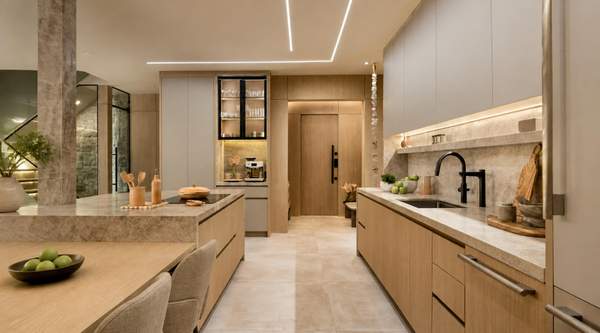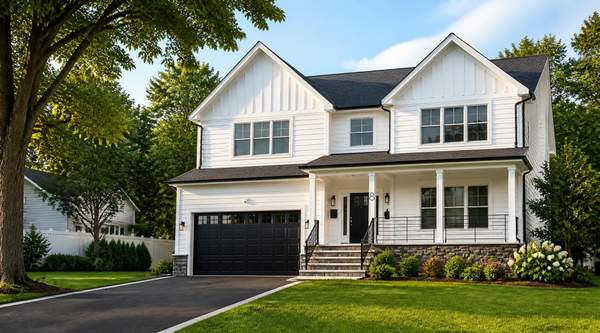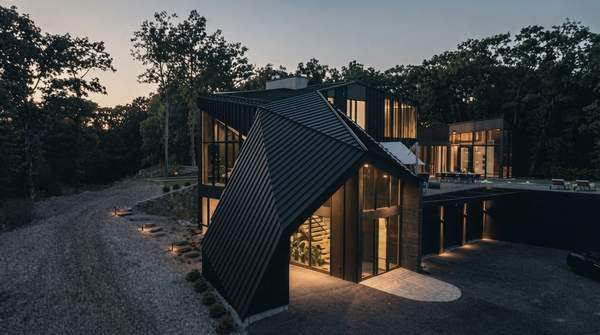
Luxury interior design has quietly redefined itself. The most refined rooms are no longer those with the rarest imported stone or the most elaborate finish work; they are the ones where every material can account for itself—where it came from, what it does to the air, and where it will go in thirty years. The practical question for a designer or client is how to evaluate a material against that standard without falling back on marketing language. The answer is a structured, repeatable framework.
Defining Sustainable Luxury in Interior Design
The American Society of Interior Designers frames ethical sourcing as a design-process commitment: choosing suppliers who uphold social and environmental values contributes to the well-being of workers and communities, and the society points designers toward databases and platforms such as mindful MATERIALS, EcoVadis, and Sedex to identify those suppliers. That is the sourcing half of the definition. The aesthetic half comes from practitioners. Luxury interior designer Sara Mosele argues that "luxury today means consciousness, an awareness of where materials come from and how they endure," with the most refined interiors emphasizing quality over quantity—timeless materials, natural finishes, and craftsmanship that values longevity.
Put together, sustainable luxury is not a material type. It is a verifiable claim about a material's full lifecycle, its sourcing ethics, and its health impact, held to the same standard of proof as its beauty. A "natural" label or a recycled-content percentage alone does not qualify.
Sustainable Luxury Material Evaluation Framework
The architecture firm HGA, a signatory to the AIA Architecture & Design Materials Pledge, evaluates interior material selections through five lenses: human health, ecosystem health, climate health, social health, and circular economy. Adapted for luxury interiors, where aesthetics carry equal weight, those lenses become the decision matrix below. To use it, score a candidate material against each dimension before specification; a material that fails one dimension is not disqualified, but the failure must be a conscious trade-off rather than an oversight.
| Dimension | What qualifies a material | Key questions to ask |
|---|---|---|
| Human Health | Maximizes positive impact on occupants, particularly indoor air quality | Does it emit VOCs? Is it low-emitting? What finishes does it carry? |
| Ecosystem Health / Sourcing | Supports ecosystem health and ethical labor through responsible harvesting and documented supply chains | Can the supplier show chain-of-custody documentation? Who made it, under what conditions? |
| Climate Health / Energy | Minimizes embodied and supply-chain carbon | Where was it manufactured and shipped from? Are energy figures published? |
| Circular Economy / Lifecycle | Durable, reusable, recyclable, and documented for disassembly | What happens at end of life—landfill, reuse, or raw-material recovery? |
| Aesthetic Longevity | Timeless rather than trend-bound; built to last decades, not seasons | Will this look—and this material—still earn its place in twenty years? |
The fifth dimension is what separates luxury practice from conventional green specification. A material that scores well on the first four dimensions but dates itself in five years fails the luxury brief, because replacement is itself an environmental cost.