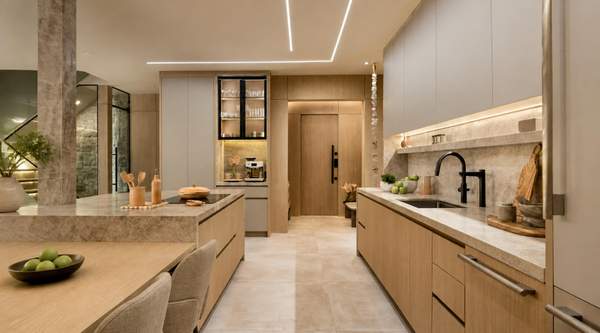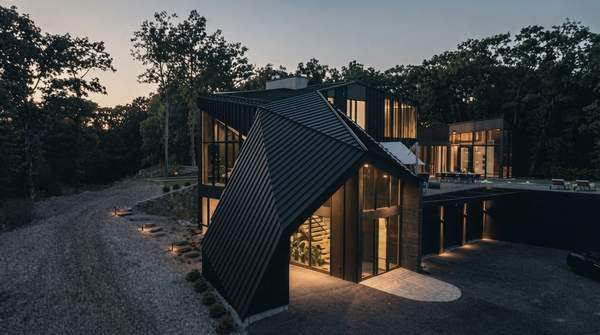
The International WELL Building Institute has introduced a new designation, WELL Interiors, built specifically for the way interior spaces are designed to support health and well-being. Announced in London on October 14, 2026, it curates strategies from the 10 WELL Building Standard concepts into a dedicated pathway for healthy interiors—one that IWBI says emphasizes the physical elements designers can directly influence, with particular depth in Materials, Light, Sound, and Movement.
Introducing WELL Interiors: A New Standard for Healthy Spaces
WELL Interiors is a design-focused designation aimed squarely at the Architecture and Design community. IWBI, which describes itself as the global authority for advancing healthy buildings, organizations and communities, frames the new pathway as a way to "empower" designers to create people-first interiors.
What distinguishes it from IWBI's existing tools is its point of entry. Rather than requiring a project to sit within a WELL Certified base building, the new designation is tailored to interior design itself. As IWBI's Kay Aguilar explained in coverage of the announcement, WELL Interiors creates "a dedicated pathway that puts the design community and its unique contributions front and center."
It is worth being precise about what this is: a new designation announced through IWBI's press materials, not a full technical standard. The specific certification criteria have not yet been detailed in the announcement, so designers should treat this as a framework for planning rather than a step-by-step roadmap.
WELL Interiors: A Prioritized Framework for Designers
The designation draws on strategies across all 10 core WELL concepts. IWBI has identified four of these—Materials, Light, Sound, and Movement—as areas of deep emphasis, which gives designers a natural hierarchy for where to concentrate early effort. The framework below organizes the full set of concepts and marks where IWBI places that emphasis.
| WELL Concept | Emphasis Level | Core Purpose in Interiors |
|---|---|---|
| Air | Included concept | Strategies related to air quality within the interior |
| Water | Included concept | Strategies related to water quality and access |
| Nourishment | Included concept | Strategies related to nourishment |
| Light | Deep emphasis | Thoughtful lighting design |
| Movement | Deep emphasis | Spaces that promote movement |
| Thermal Comfort | Included concept | Strategies related to thermal comfort |
| Sound | Deep emphasis | Improved acoustics |
| Materials | Deep emphasis | Healthy materials |
| Mind | Included concept | Strategies supporting mental well-being |
| Community | Included concept | Strategies supporting connection and community |
Read as a prioritization tool, the framework tells a designer where to begin: lighting choices, material selection, acoustic performance, and opportunities for movement come first, while the remaining six concepts round out the approach. Coverage of the announcement also notes that key strategies include spaces promoting connection to nature, aligning with the biophilic elements IWBI highlights in its business case.
Deep Emphasis Areas: Prioritizing Key Design Elements
The four deep-emphasis areas share a common thread: they are physical elements of an interior that architects and designers can directly influence. That is the logic behind the prioritization. A designer specifying finishes controls material chemistry; one laying out a floor plate controls how people move through it; lighting and acoustic treatments are likewise squarely within the profession's traditional scope.
This makes the designation unusually actionable for interior practices. Rather than asking designers to influence building systems they may not control, WELL Interiors concentrates its deepest requirements where design decisions are made every day. For firms pitching health-focused work, that framing is itself part of the value proposition.
The Business Case for WELL Interiors: Benefits for All Stakeholders
IWBI's announcement pairs the framework with a quantified pitch. According to the institute, research shows health-focused design can safeguard quality specifications through independent, third-party verification while delivering measurable financial returns.
The specific benefits IWBI cites are threefold: design initiatives can boost productivity, improve overall occupant satisfaction by nearly 30%, and enhance asset value through rent premiums for commercial spaces featuring high levels of daylight and biophilia. These figures come from IWBI's own announcement materials, so designers presenting them to clients should attribute them accordingly rather than presenting them as independent findings.
For building owners, the rent-premium argument is the most concrete: spaces with abundant daylight and biophilic design command higher rents, per the research IWBI references. For occupants, the near-30% satisfaction improvement is the headline number. For designers, third-party verification offers a way to protect specification quality against value engineering.
Making the Case for Health-Focused Interior Design
WELL Interiors is best understood as an invitation: a structured, prioritized framework that lets interior designers claim health and well-being as their own contribution rather than a building-level concern. It is new, its criteria are not yet fully published, and it should not be confused with IWBI's existing tools for interiors projects within certified base buildings—but its direction is clear.
Designers and stakeholders should consider adopting the WELL Interiors designation to leverage the documented benefits in occupant satisfaction and financial returns that IWBI cites. The measurable indicators to watch are concrete: increased client interest in health-focused design, improved occupant feedback on well-being, and measurable increases in asset value for WELL Interiors certified projects. The next milestone for the industry will be IWBI's publication of the designation's specific criteria, which will turn this framework into a certifiable pathway.